

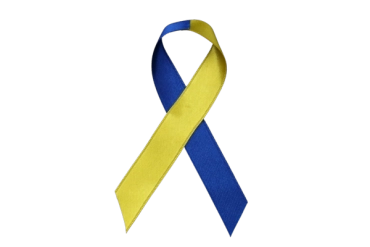



Psst, you. Yeah, you. We’ve got a question for you. What’s blue and yellow with a white background? A bird? A plane? Oh, what was that? The Down Syndrome ribbon, you said?
That’s right, everyone! It’s 21 March, World Down Syndrome Day, and we are here to celebrate it with you!
For today, we’ve got a special article prepared. We’re going to cover:
If that sounds like a lot, don’t worry. we’ll break everything down step by step. Stick with us, yeah? We’ve got you.
💡Fun fact! The Down Syndrome ribbon is blue to represent the sky and its endless possibility, yellow for happiness and positivity, and white for purity. Neat, right?
First things first, let’s clarify what it is.
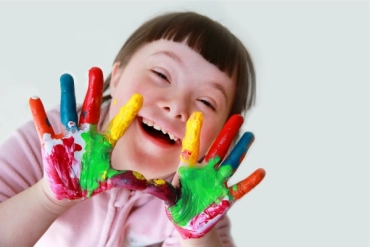
Down Syndrome is a genetic condition that affects learning and development. It also results in affected individuals having distinct physical characteristics.
This condition occurs due to the presence of an extra copy of chromosome 21. If that sounds complicated, don’t worry—we’ll explain in just a bit. Essentially, this extra chromosome changes how the brain develops, leading to both physical and intellectual challenges over a person’s lifetime.
Despite common misconceptions, individuals with Down Syndrome can lead healthy, fulfilling, and independent lives. However, because it’s a genetic condition, there’s no “cure”—it’s a lifelong journey.
💡Fun fact! Did you know that according to HealthXchange, about 1 in 700 babies in Singapore have Down Syndrome? Read on to find out more about how to support them.
Alright, let’s get a little scientific—but we promise to keep it simple!
We all have DNA in our cells, which acts as our body’s biological code. This DNA is stored in chromosomes—small, tightly packed bundles of genetic information.
Typically, each person has 46 chromosomes—23 from the mother and 23 from the father. Got it so far?
Great! Now, individuals with Down Syndrome have 47 chromosomes instead of 46. This extra chromosome—specifically chromosome 21—is the result of an unusual cell division, which leads to an uneven distribution of DNA.
This results in 3 types of Down Syndrome:
Instead of the usual two copies, all cells end up with a third copy of chromosome 21. This occurs due to an error in cell division during early development.
In this case, only some cells have an extra copy of chromosome 21, while others have the usual 46 chromosomes. The individual will still show symptoms of Down Syndrome.
Here, a portion of chromosome 21 attaches (or translocates) to another chromosome before or during pregnancy. The person still has two copies of chromosome 21 but also carries extra genetic material from chromosome 21.
💡Fun Fact! World Down Syndrome Day is on 21st March (21/3) because of Trisomy (3 copies) 21 (chromosome 21). Pretty cool, huh?
Translocation Down Syndrome is not typically inherited, meaning that most cases of Down Syndrome occur by chance.
However, certain risk factors can increase the likelihood, such as:
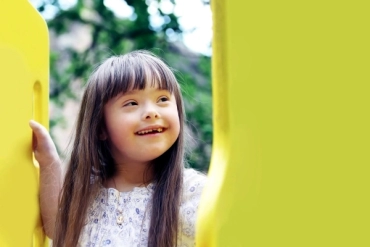
Individuals with Down Syndrome often have distinct physical characteristics, which may include:
Beyond physical traits, developmental delays are common. These may include:
For more information on the causes and symptoms of Down Syndrome, check out Mayo Clinic’s helpful article!
There are 2 types of tests to confirm if an individual has Down Syndrome – the screening test, and the diagnostic test.
The screening test checks how likely it is that the fetus has Down Syndrome or not, and the diagnostic test checks for sure if the baby has Down Syndrome or not.
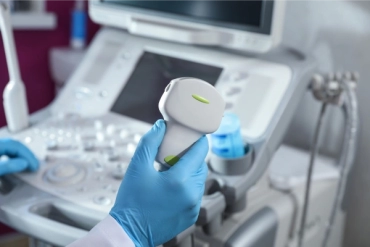
During pregnancy, the screening test typically involves a blood test and an ultrasound. This can be done during the first 3 months of pregnancy and is called a first trimester combined test.
Alternatively, a blood test can be done in the first trimester and a measure of certain proteins in the blood can be done in the second trimester. This is called an integrated screening test.
Diagnostic tests are carried out if the results of the screening test are positive, or uncertain. Some examples of diagnostic tests include a cell sampling, or a sampling of the fluid in the womb.
Since these tests involve getting samples from the baby’s cells while it’s still in the womb, there’s a non-zero chance that they might induce a miscarriage or other complications.
After birth, a physical examination of the baby can usually determine if they have Down Syndrome or not. This is due to the distinct physical features mentioned earlier.
Okay, so if the baby is diagnosed with Down Syndrome, they require early intervention. This could come in the form of:
Down Syndrome can also, unfortunately, come with other complications. These need to be treated separately, and could include:
For more information about the diagnosis and treatment of Down Syndrome, this article by Cleveland Clinic is enormously useful!
You’re not alone—there are many support networks in Singapore for individuals with Down Syndrome and their families.
But beyond us, there’s a whole vibrant community of people in Singapore who want to support you and your loved ones with Down Syndrome. The Down Syndrome Association (Singapore) in particular offers a whole range of services, such as
Let us know in the comments how you’re celebrating World Down Syndrome Day. Or, if you have a story to share about Down Syndrome? We’re all ears. Drop us a comment below! — we’d love to hear from you! 👇👇👇