Quick answer
By 2, most children use around 50 words and start joining two words (“more milk”). By 3, most speak in short sentences that family can understand. If your child isn’t joining words at 2, has lost words, or doesn’t point, wave or respond to their name, don’t wait and see. Speak to your doctor, and start supporting communication now.
“Boys talk later one.” “His daddy also talked late.” “Wait until he goes to school.”
If you have a quiet toddler, you have probably heard all of these, usually from a well-meaning aunty at CNY.
Some late talkers do catch up on their own. But some don’t, and the early years are when the brain learns language fastest. Waiting can cost precious time. Here’s how to know what’s typical, what’s a red flag, and what you can do today.
In this article
Talking milestones: what’s typical?
Every child is different, but most children reach these milestones by around:
- 12 months: babbles, waves bye-bye, says a first word such as “mama” or “dada”.
- 18 months: uses at least a few words and points to show you things.
- 2 years: uses around 50 words and starts joining two words (“daddy go”, “more milk”).
- 3 years: speaks in short sentences, asks simple questions and is mostly understood by family.
Bilingual children may mix languages, and that’s normal. Count words across all the languages your child uses.
Quick self-check for 2-year-olds
Tap each one your child does most days.
Most 2-year-olds do all seven. If you ticked five or fewer, or your child has lost words, speak to your doctor now rather than waiting.
Red flags: when not to wait
Speak to your paediatrician or polyclinic doctor if your child:
- Isn’t babbling by 12 months, or has no words by 16 to 18 months.
- Isn’t joining two words by 2 years.
- Loses words or skills they used to have. (Always see a doctor about this.)
- Doesn’t point, wave, or bring things to show you.
- Doesn’t respond to their name or seems not to understand simple instructions.
- Gets very frustrated or has frequent meltdowns because they can’t tell you what they want.
In Singapore, your polyclinic or paediatrician can refer your child to the Department of Child Development at KKH or the Child Development Unit at NUH for a full developmental assessment. A hearing test is often one of the first steps.
Late talker vs speech delay vs autism: what’s the difference?
These words get mixed up a lot. Here is the simple version:
- Late talker: understands well, uses gestures, loves to connect, but has few words. Many catch up, but not all, so support still helps.
- Speech or language delay: talking (and sometimes understanding) is behind for their age. A speech therapist can assess this.
- Autism: late talking comes with other signs, such as little pointing or eye contact, not responding to name, or very repetitive play. A doctor can refer you for a developmental assessment.
Expressive or receptive delay?
You may hear these terms from a doctor or therapist. An expressive delay means your child understands well but has trouble saying words and sentences. A receptive delay means understanding words and instructions is also hard. Many late talkers have an expressive delay only, which is a hopeful sign. Trouble with understanding is a stronger reason to get checked early.
A child who is “not talking but understands everything” is more often a late talker. A child who is “babbling but not talking” at 2 is still worth checking: babble is a good sign, but by 2 most children use real words.
ONE teacher tip
Count gestures as communication. A child who pulls you to the fridge and points is telling you a lot. Name it for them: “Milk! You want milk.”
Read next
1. Late talking and speech delay: signs and how we help
2. How to Raise a Confident Speaker at Home: 3 Simple Steps
3. Early Signs of Autism in Toddlers (18 Months to 3 Years): What to Look For and What to Do
7 ways to boost talking at home
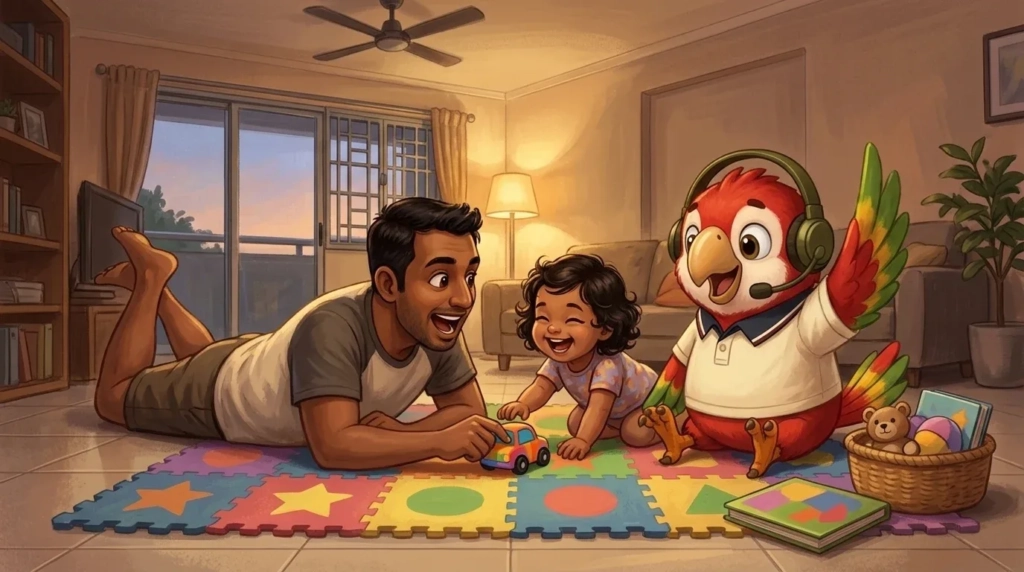
- Get face to face. Sit at their level so they can see your mouth.
- Talk about what they’re doing. “You’re pushing the car. Vroom!”
- Add one word. If your child says “ball”, you say “big ball” or “throw ball”.
- Pause and wait. Leave a gap of 5 to 10 seconds so they have a chance to try.
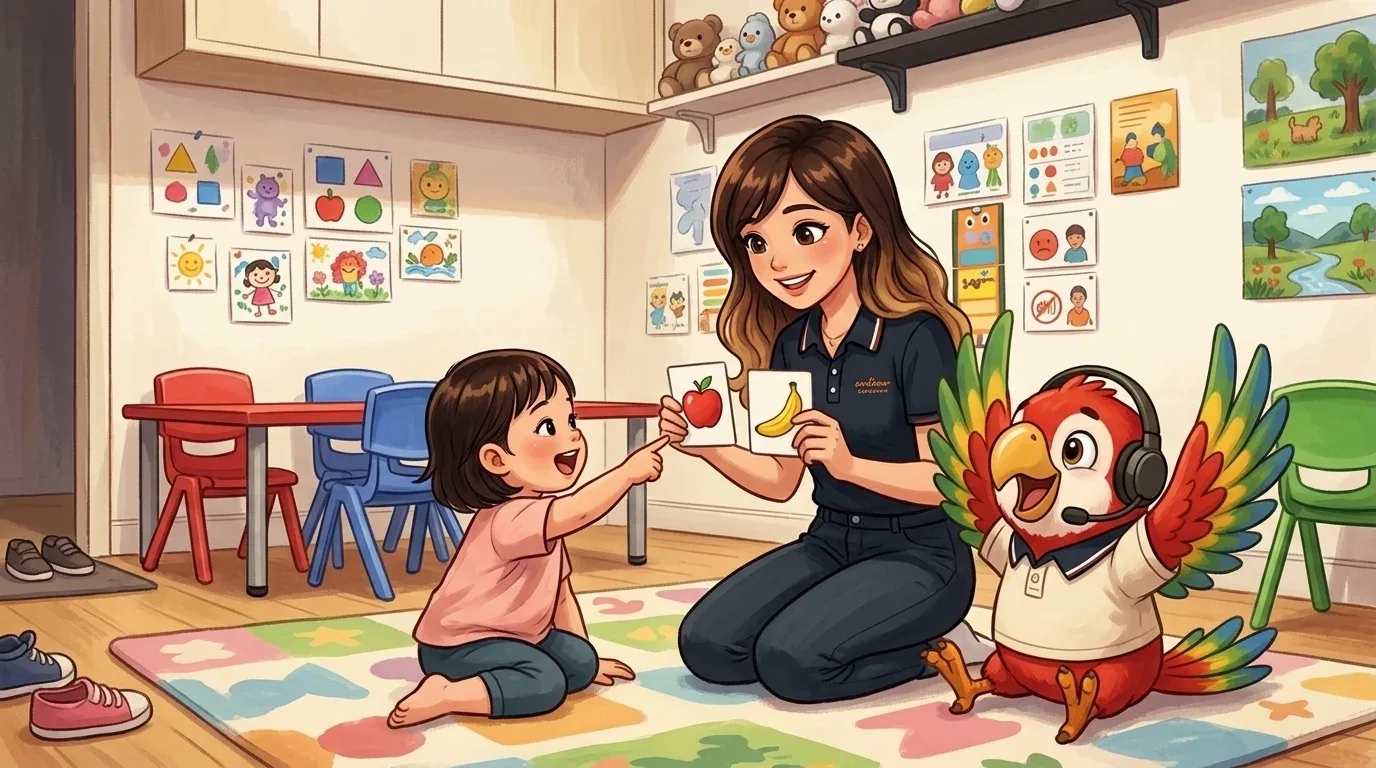
- Offer choices. “Apple or banana?” Hold both up so they can point or say it.
- Sing and read together. Songs with actions and the same picture books again and again.
- Cut down screen time. Talking with people teaches language far better than videos.
Free printable
Talking Self-Check for 2-Year-Olds
The self-check, milestones and 7 talking tips on one page for the fridge. Get the free PDF
How ONE helps late talkers
Communication is one of our 7 Pillars of Growth. Every new child starts with a placement assessment with Grace Teo, our founder and child psychologist. It takes about an hour, it is not a diagnosis, and it helps us understand how your child communicates now and which class or 1:1 programme fits best.
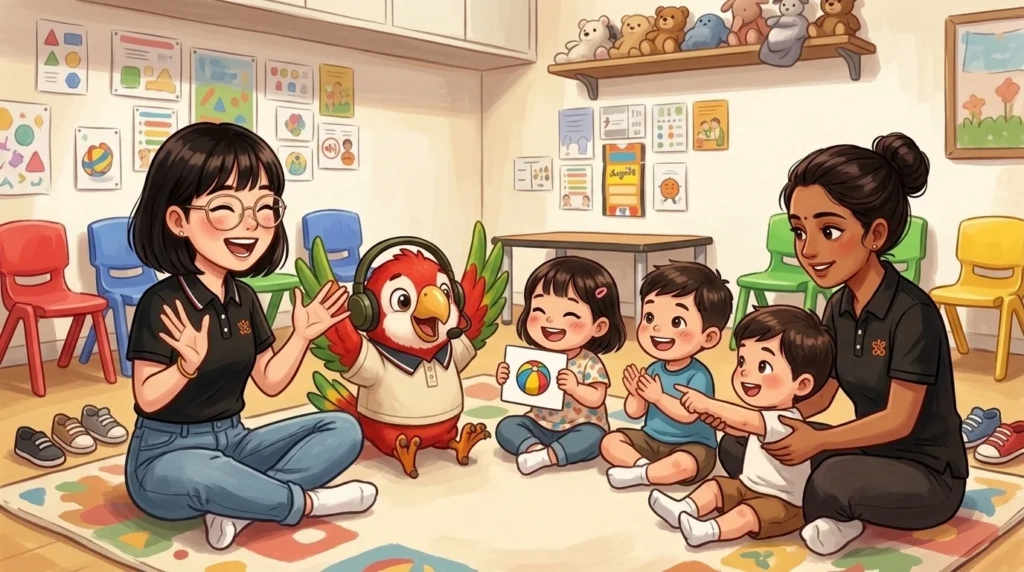
In small groups (at most 1 teacher to 3 children), we use pictures, songs, play and everyday routines to help children ask, choose, greet and share. Progress is tracked weekly, with a monthly report for parents. ONE also has a locum speech therapist, and if your child already sees one elsewhere, we’re happy to work alongside them.
Not sure where your child is at? Learn about our placement assessment and how we support late talking, or WhatsApp us. Our early intervention programme in Eunos is for children aged 18 months to 6.
Questions parents ask
Can screen time or shows like Cocomelon cause speech delay?
Shows alone don’t cause a speech delay, but a lot of screen time in the toddler years is linked with slower language, mostly because it replaces talking and playing with people. The American Academy of Pediatrics suggests no screens before 18 months (video calls are fine) and about 1 hour a day of good-quality shows, watched together, for ages 2 to 5.
My 2-year-old is babbling but not talking. Is that normal?
Babbling is a good foundation, but by 2 most children use real words and start joining two. If your child mostly babbles, speak to your doctor and start the home tips in this article now.
My 2-year-old understands everything but doesn’t talk. Should I worry?
Good understanding is a positive sign, and many of these children are late talkers who catch up. Still, check with your doctor if your child isn’t joining words by 2, rather than waiting.
Is it normal for a 2-year-old not to talk?
Some 2-year-olds have only a few words, but most use around 50 words and start joining two words. If your child isn’t, speak to your doctor rather than waiting.
Do boys talk later than girls?
On average, slightly. But being a boy doesn’t explain a big delay. Use the same milestones for boys and girls.
Does speaking two languages cause speech delay?
No. Bilingual children may mix languages, but they reach milestones at about the same time when you count words in both languages.
Who can diagnose a speech or language delay in Singapore?
Start with your polyclinic doctor or paediatrician. They can refer you to KKH or NUH for a developmental assessment, which may include a speech therapist and a hearing test.
Key takeaways
- By 2, most children use about 50 words and join two words together.
- Lost words, no pointing or waving, or no response to name are reasons to see a doctor now.
- Late talking can have many causes. Early support helps whatever the reason.
- Face-to-face play, adding one word and waiting for a reply all boost talking at home.
Sources: CDC, Learn the Signs. Act Early. milestones; KK Women’s and Children’s Hospital, Department of Child Development.
Written by the ONE Intervention team. This article is general information, not a diagnosis or medical advice. If you are worried about your child, speak to your paediatrician or polyclinic doctor.