Quick answer
On Monday 15 June 2026, children from our school holiday programme visited Pre-School By the Park. They climbed and balanced in the garden play area, picked and cut fresh leaves at a garden table, and said hello to the rabbits. Below: what they did, why each part helps, and how to make a new place feel easier for your own child.
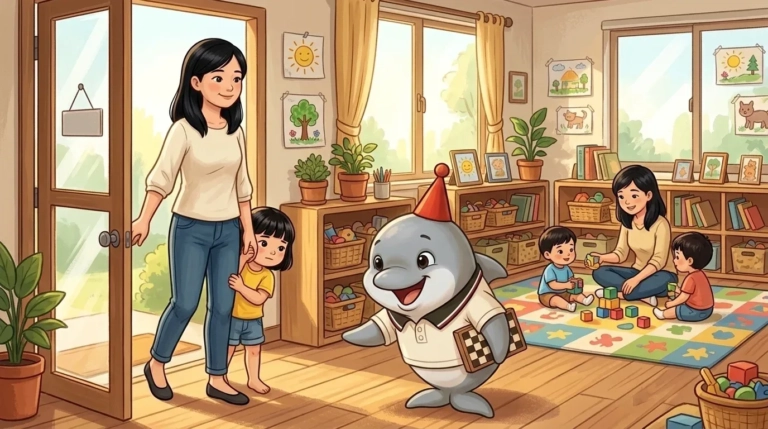
A new school, new grown-ups and a garden full of things to try. Visiting another preschool is a big day out for a child, and our holiday group was ready for it.
We travelled there together by coach, which is a small adventure on its own: finding a seat, putting on the seat belt and waiting for the ride to end.
What we did at Pre-School By the Park
1. Climbing and balancing in the garden
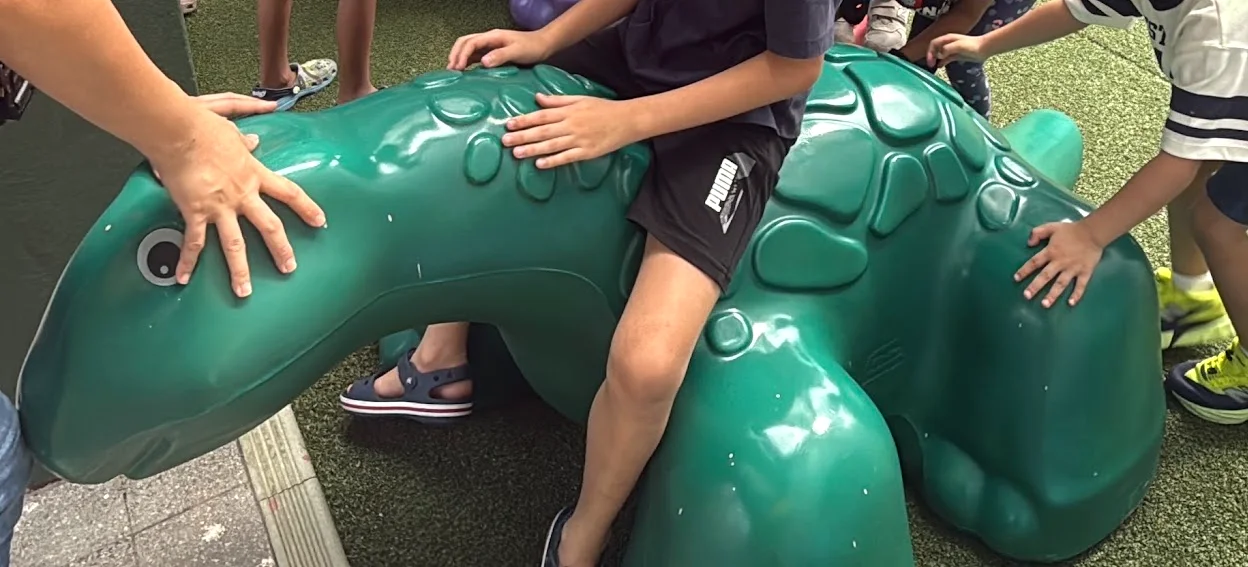
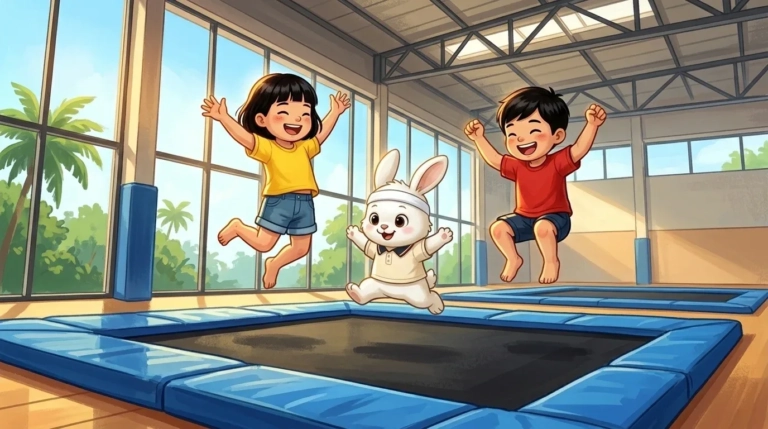
The garden play area has soft turf, a climbing frame and big dinosaur rockers. The children climbed on, balanced, slid off and climbed on again, with a teacher’s hand close by.
Why this helps: climbing and balancing build body strength and coordination, and they give the body a good dose of movement before a sit-down activity.
2. Garden cooking: picking and cutting leaves
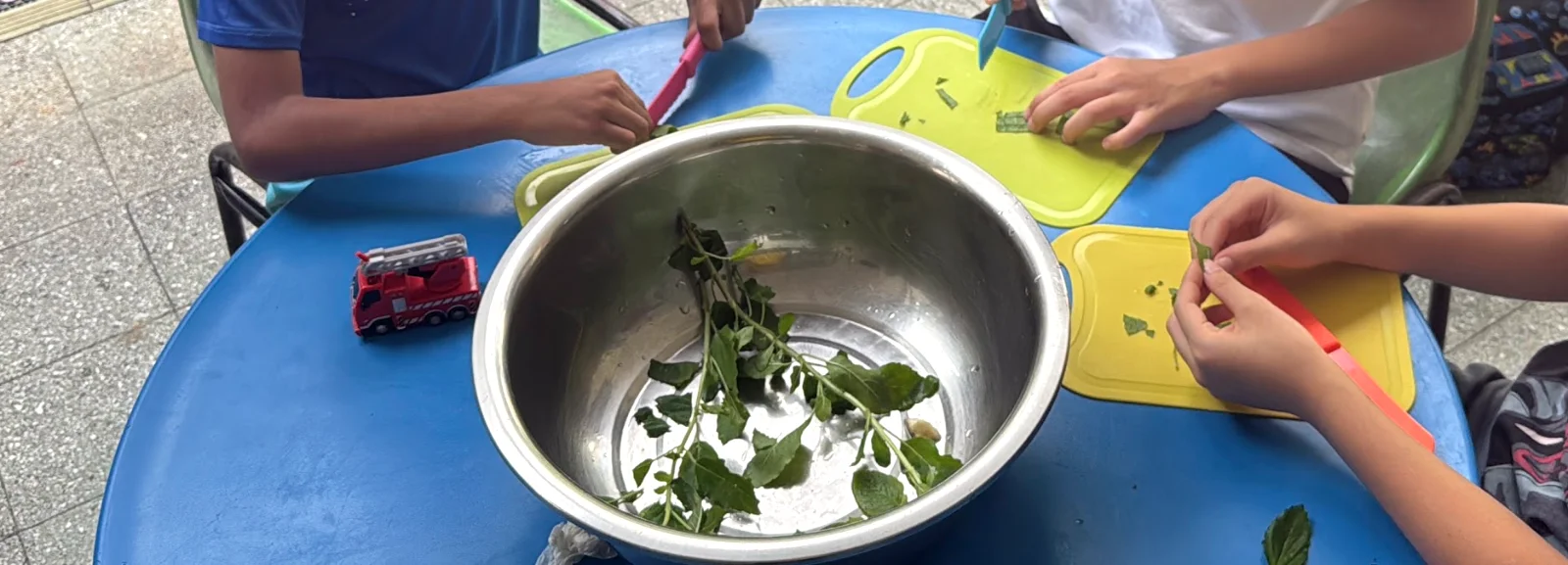
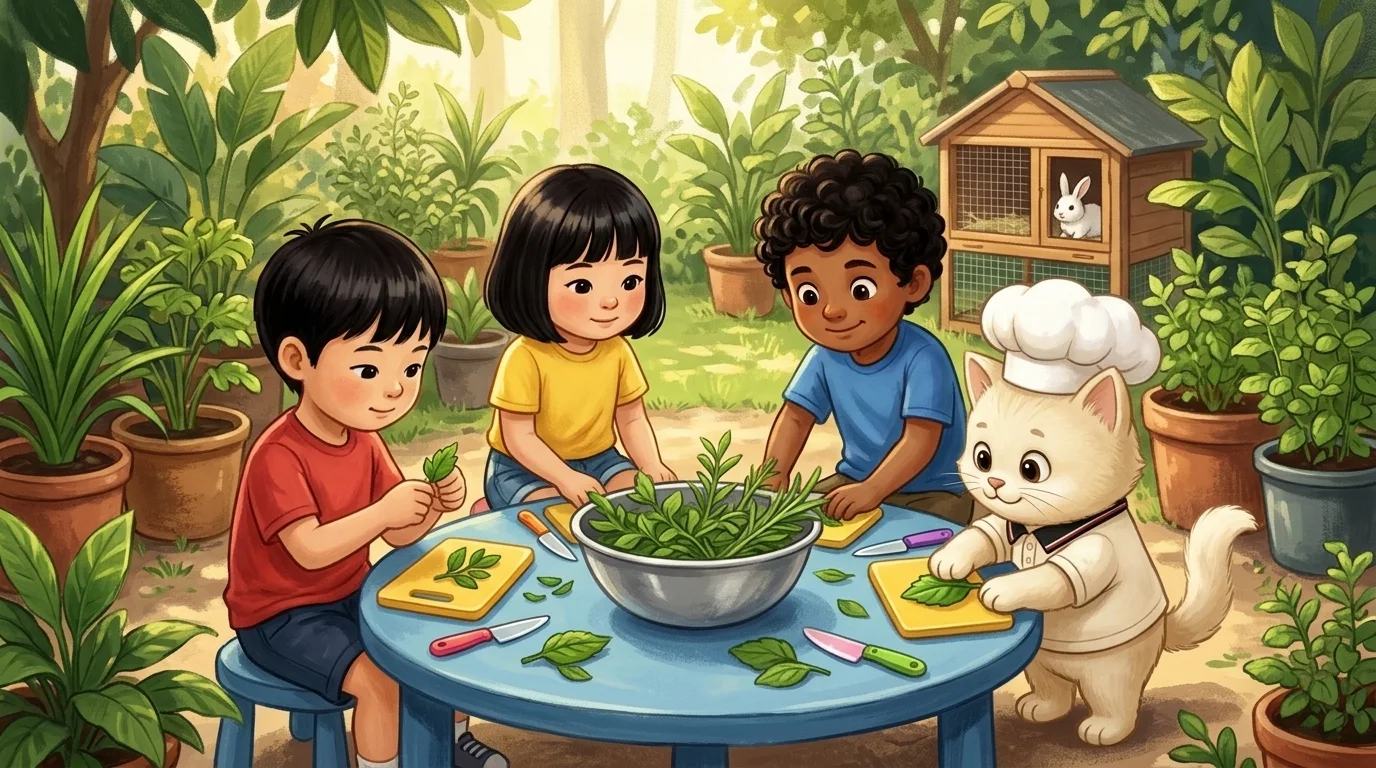
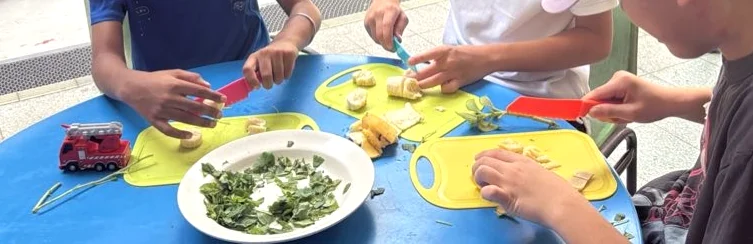
At a round garden table, each child had a small cutting board and a child-safe knife. They pulled leaves off the stems, cut them into small pieces and dropped them into a big shared bowl.
Why this helps: pulling leaves and holding a knife work the small muscles of the hands, the same ones children need for buttons, zips and pencils. Sharing one bowl is turn-taking practice too.
Some children went slowly and carefully, some chopped fast. Both are fine. The teachers showed each step first, then let the children try on their own.
ONE teacher tip
Show one step at a time, then wait. “Hold the leaf. Now cut.” Short, clear words help a child follow along without feeling rushed.
3. Meeting the rabbits
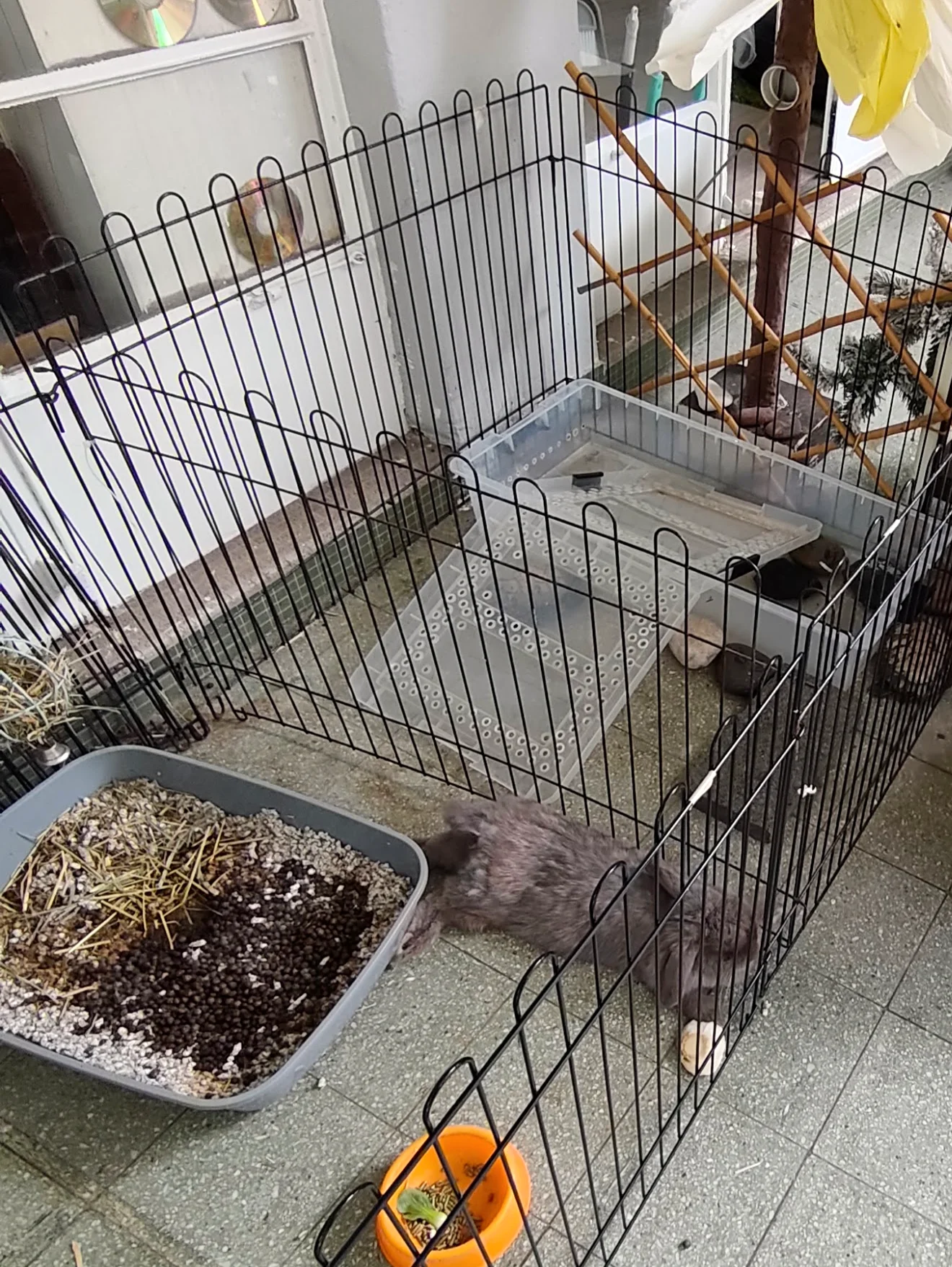
Before going home, the children visited the rabbits. Watching quietly, crouching low and keeping hands outside the fence all take a lot of self-control, and they managed it beautifully.
Why this helps: animals are a gentle way to practise calm bodies and quiet voices, and many children who find people tiring relax around animals.
Helping your child cope with a new place
- Show photos first. Look at the school or place online together and talk about what you will see.
- Say the plan in order. “Bus, play, cooking, rabbits, bus home.” Pictures help even more.
- Start with movement. A run or a climb first makes it easier to sit for a table activity.
- Give a job. Carrying the bag or holding the bowl gives a worried child something to focus on.
- Plan the goodbye. Give a 5-minute warning before it is time to leave.
“Some of them had never held a knife before. By the end, they were asking for more leaves to cut.”
— Jiaying, Associate Early Years Lead at ONE
Preparing your child to visit a new school
Whether it is a school visit, a new class or Primary 1 orientation, a little preparation makes a big difference. This is what we do before every visit:
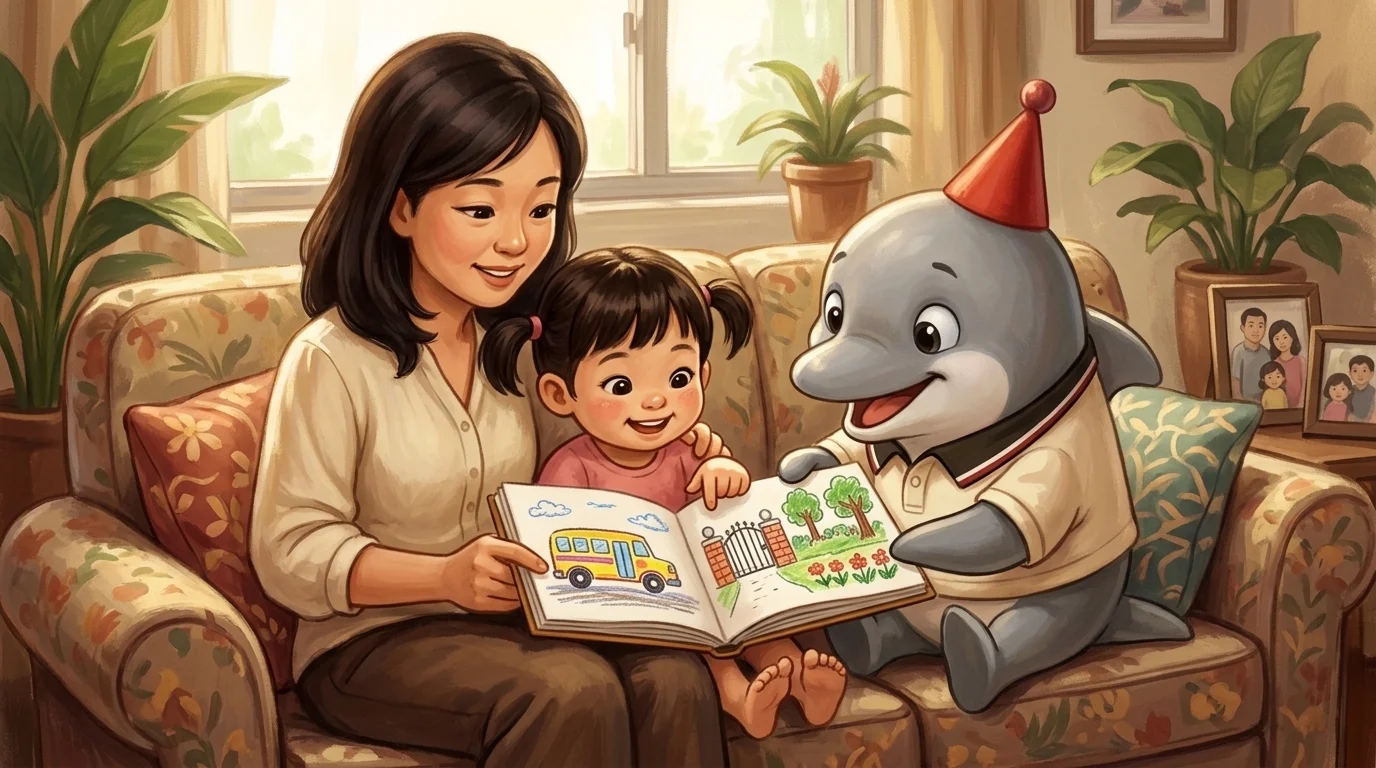
- Make a short picture story. Four or five photos: the bus, the gate, the classroom or garden, the activity, going home. Read it together two or three times before the day.
- Name the new people. “There will be new teachers. They will say hello. You can wave.” Practise the wave at home.
- Pack something familiar. A water bottle, a cap or a small toy from home helps a child feel anchored.
- Agree a break signal. A card, a hand sign or a word that means “I need a break”. Practise it so it is easy to use.
- Talk about it afterwards. Look at photos together and name one thing your child did well: “You held the knife so carefully.”
ONE teacher tip
Keep the first visit short and end on a good moment. A child who leaves happy will walk in more easily next time.
Some children find new places especially hard because of noise, crowds or textures. If that sounds like your child, read about how we help children with sensory needs.
Free printable
Picture cards and a simple plan to help your child get ready for a new school or class. Get the free PDF
How ONE helps
Outings are part of learning at ONE. In our school holiday programme, trips like this let children practise real-life skills: waiting, taking turns, following a plan in a new place and asking for a break. Our Life & Learning Programme for ages 7 to 12 builds these skills on purpose, and younger children start in Early Intervention and School Readiness.
Would you like your child to learn through real outings like this? WhatsApp us to visit our centre, 5 minutes’ walk from Eunos MRT.
Questions parents ask
Is it safe for young children to use knives?
With a child-safe knife, soft food and an adult beside them, yes. Start with something easy to cut, like leaves, banana or soft cheese, and show the grip first.
My child gets upset in new places. Should we avoid outings?
Not necessarily. Start with short visits to quieter places, show photos first, and leave while it is still going well. Each good visit makes the next one easier.
Can my child join ONE’s school holiday programme?
Our holiday programme runs during the school holidays for children in our programmes. Message us on WhatsApp to ask about the next one.
How can I prepare my child for Primary 1 orientation?
Use the same steps: a short picture story, practise the route, name the new people, agree a break signal, and talk about it afterwards. Start a few weeks before.
This article is general information, not a diagnosis or medical advice. If you are worried about your child, speak to your paediatrician or polyclinic doctor.