
Quick answer
Our Centropod centre has a trampoline gym. With a teacher beside them, children bounce, balance and stop on a signal. Bouncing gives strong movement and body feedback, which builds balance and body awareness and helps many children feel calmer and more ready to learn afterwards. It is also a safe, happy way to release energy, so children come back to the table settled and ready to focus.
Some children cannot sit still until their body has had a good move. Others are unsure of their feet and need help to feel steady. A trampoline helps both, and it is one of the most popular spots at our Centropod centre.
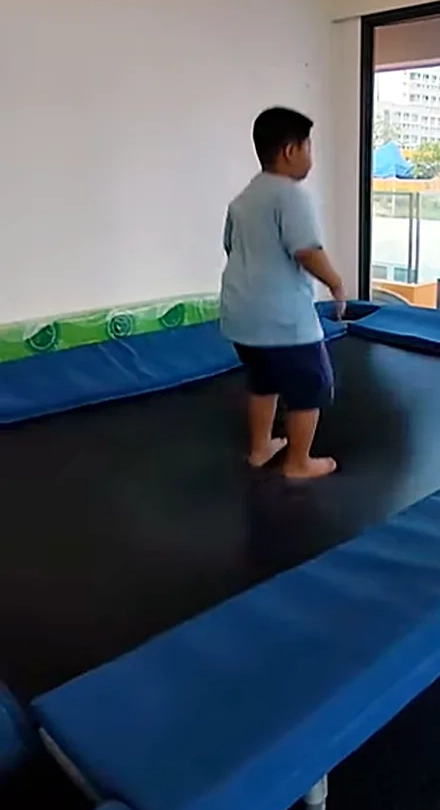
Why bouncing helps
- Balance: the surface moves under their feet, so the body keeps adjusting. This builds core strength and steadiness.
- Body awareness: each landing tells the joints and muscles where the body is. Many children who crash, bump or flop find this feedback calming.
- Ready to learn: a short burst of movement often helps children settle at the table afterwards.
- Listening and waiting: “Bounce… and freeze!” games practise following an instruction and stopping, two skills every classroom needs.

What we practise on the trampoline
Bouncing is never just bouncing. Teachers build small goals into the fun, chosen from each child’s plan in the Physical pillar:
- Stand steady, then bounce with two feet together.
- Bounce and freeze when the music stops.
- Count 10 bounces, then climb off safely.
- Wait for a turn and cheer for a friend.
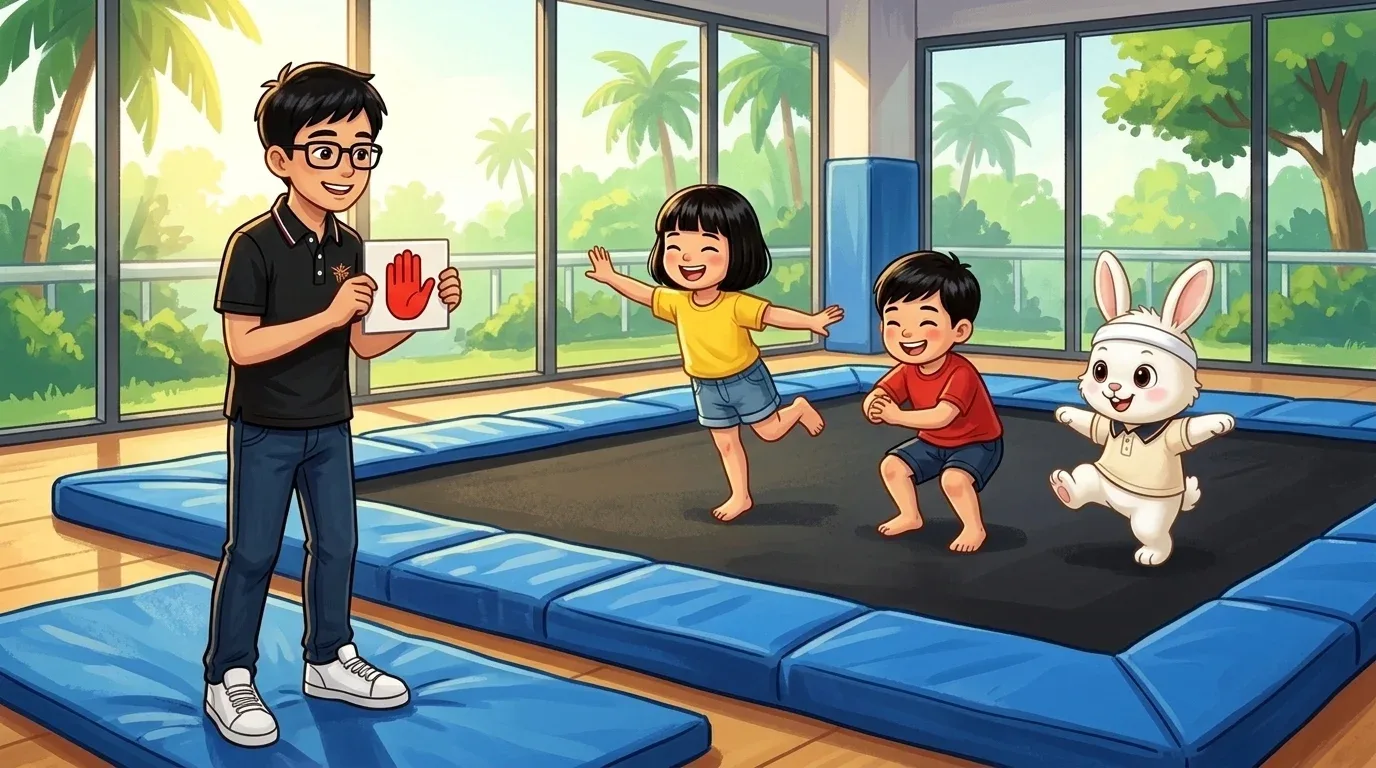
How we keep it safe
Health guidance does not recommend home trampolines for young children, because most injuries happen when several children bounce together or someone falls off. A gym session with soft padding, clear rules and an adult right beside the child is a different situation. At ONE, a teacher stays with the child throughout and children take turns.
Try it at home (no trampoline needed)
- Frog jumps: jump from one cushion “lily pad” to the next on the floor.
- Jump and freeze: play music and freeze like a statue when it stops.
- Wall push-ups: push against the wall for 10 counts before homework, for the same calming “heavy work”.
ONE teacher tip
If your child is bouncing off the walls before dinner or homework, try five minutes of jumping or animal walks first. Movement before sitting often works better than asking them to sit still.
How ONE helps
Movement is planned into every day at ONE, alongside our climbing wall at Hexacube. Our child psychologist sets each child’s physical goals, and teachers track progress so you can see what is changing.
Would you like to see our trampoline gym? WhatsApp us to book a centre visit. Both our centres are a 5-minute walk from Eunos MRT.
Questions parents ask
Is trampolining good for children with autism or sensory needs?
Many children who seek movement enjoy it and feel calmer afterwards. Others find the movement too much at first. We start slowly and watch how each child responds. If your child has sensory needs, an occupational therapist can advise what suits them best.
Are trampolines safe for young children?
Home trampolines are not recommended for young children, mainly because of falls and collisions. Supervised sessions with padding, one child at a time and an adult beside them are much safer. Always follow your doctor’s advice if your child has a medical condition.
My child is clumsy. Will this help?
Balance and body-awareness activities can help, and they work best when practised often. If you are worried about your child’s coordination, read when to check delayed milestones.
This article is general information, not medical advice.