Quick answer
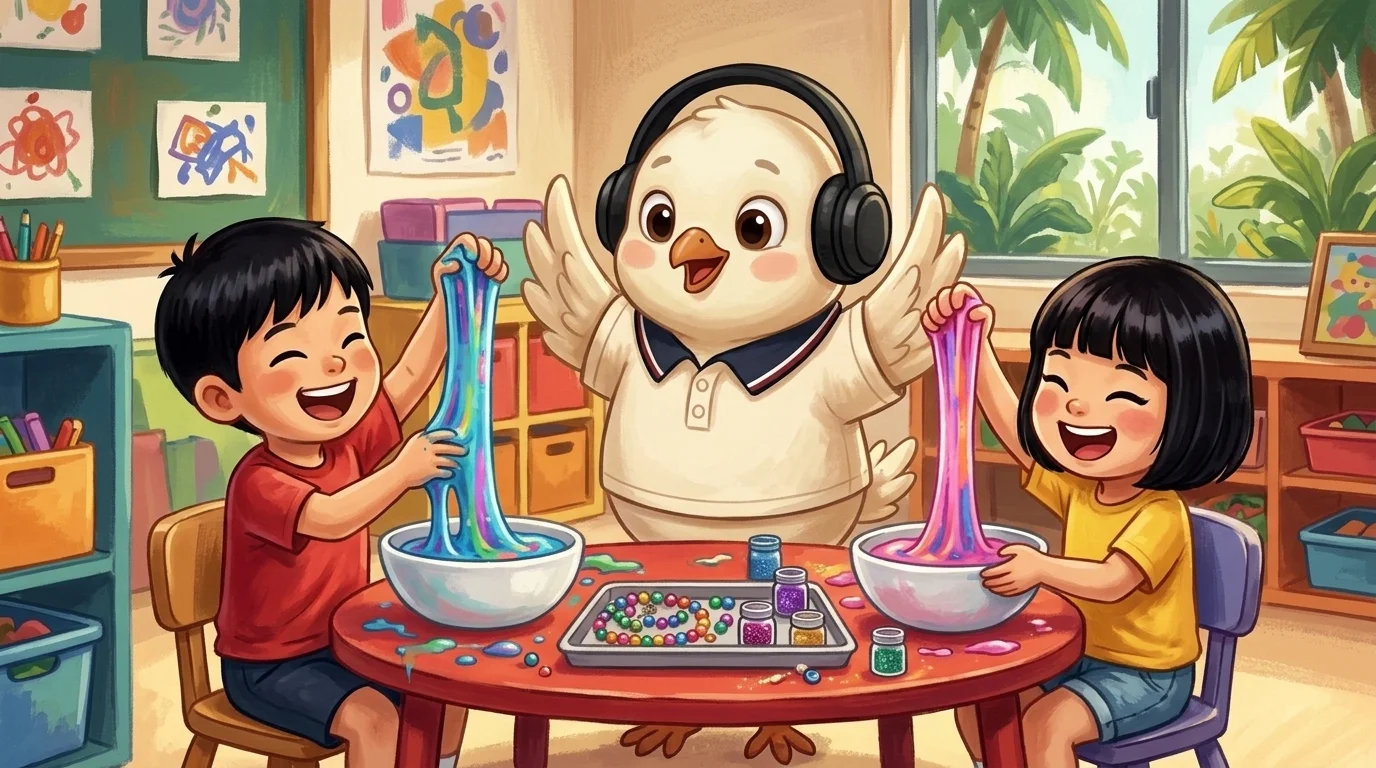
On Friday 5 December 2025, Z Slime came to ONE to run a DIY slime workshop for the children in our school holiday programme. The children mixed their own slime, coloured it, stretched it high, blew slime bubbles and picked toppings for a tub to take home. Below: what they did, the skills hiding inside a messy activity, and how to try slime safely at home.
Few things get a group of children leaning in like a big bowl of slime. Cool, stretchy, a little bit gooey: some children dive straight in, others need a minute. Both are fine.
What we did at the slime workshop
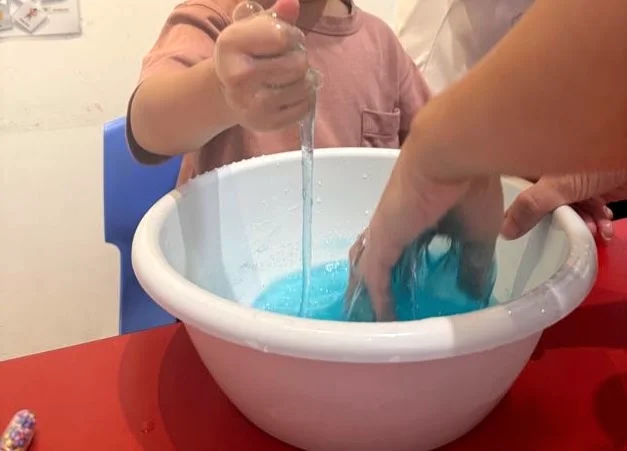
1. Mixing it ourselves
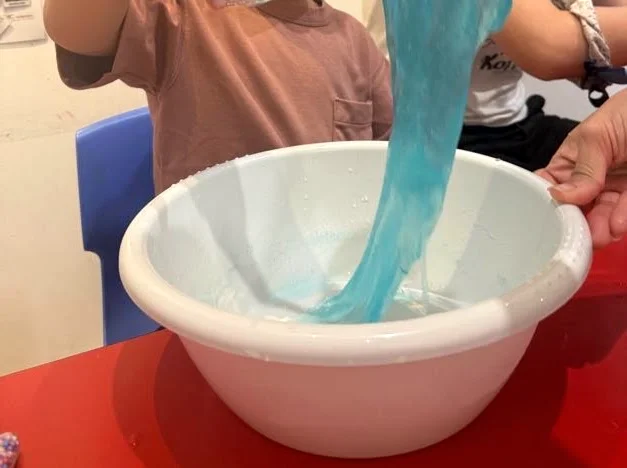
Each child worked over a big bowl, stirring and squeezing until the mixture turned into slime. A grown-up was always close by to help.
Why this helps: following steps in order (pour, stir, squeeze, wait) is real practice in listening to instructions.
2. Touching, poking and pressing
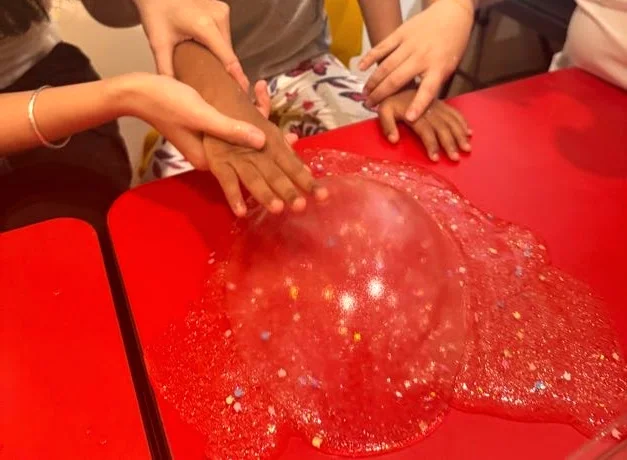
Clear slime spread across the table, and the children pressed, patted and poked it. For some it was the first time they had touched something so sticky.
Why this helps: messy play is a gentle way to explore new textures. Children who avoid sticky or wet things can start with one finger and build up at their own pace.
ONE teacher tip
Never force a child to touch slime. Offer a spoon or a stick first, or let them watch. Curiosity usually wins in the end.
3. Slime bubbles
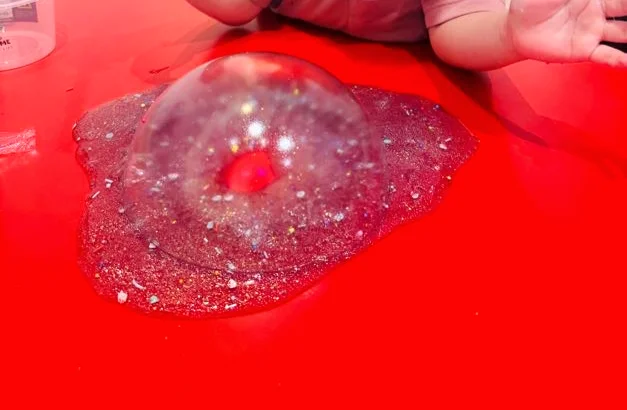
Then the big trick: slime bubbles. The children watched a dome of slime puff up on the table, then made their own.
4. Choosing toppings and taking turns
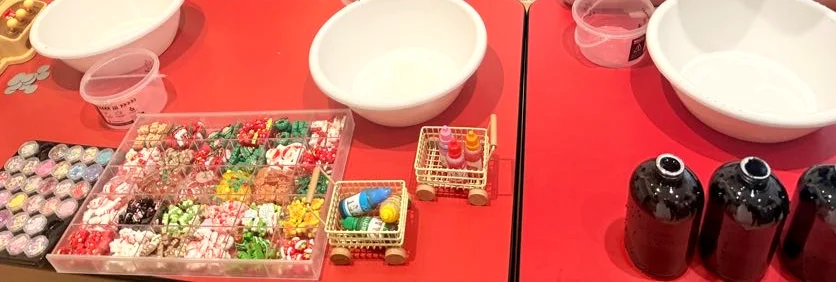
A tray of beads, glitter and little toppings sat in the middle of the table. The children asked for what they wanted, waited for their turn and shared.
Why this helps: asking, choosing and waiting are communication and turn-taking skills, practised in a moment children really care about.
5. Stretch it high!
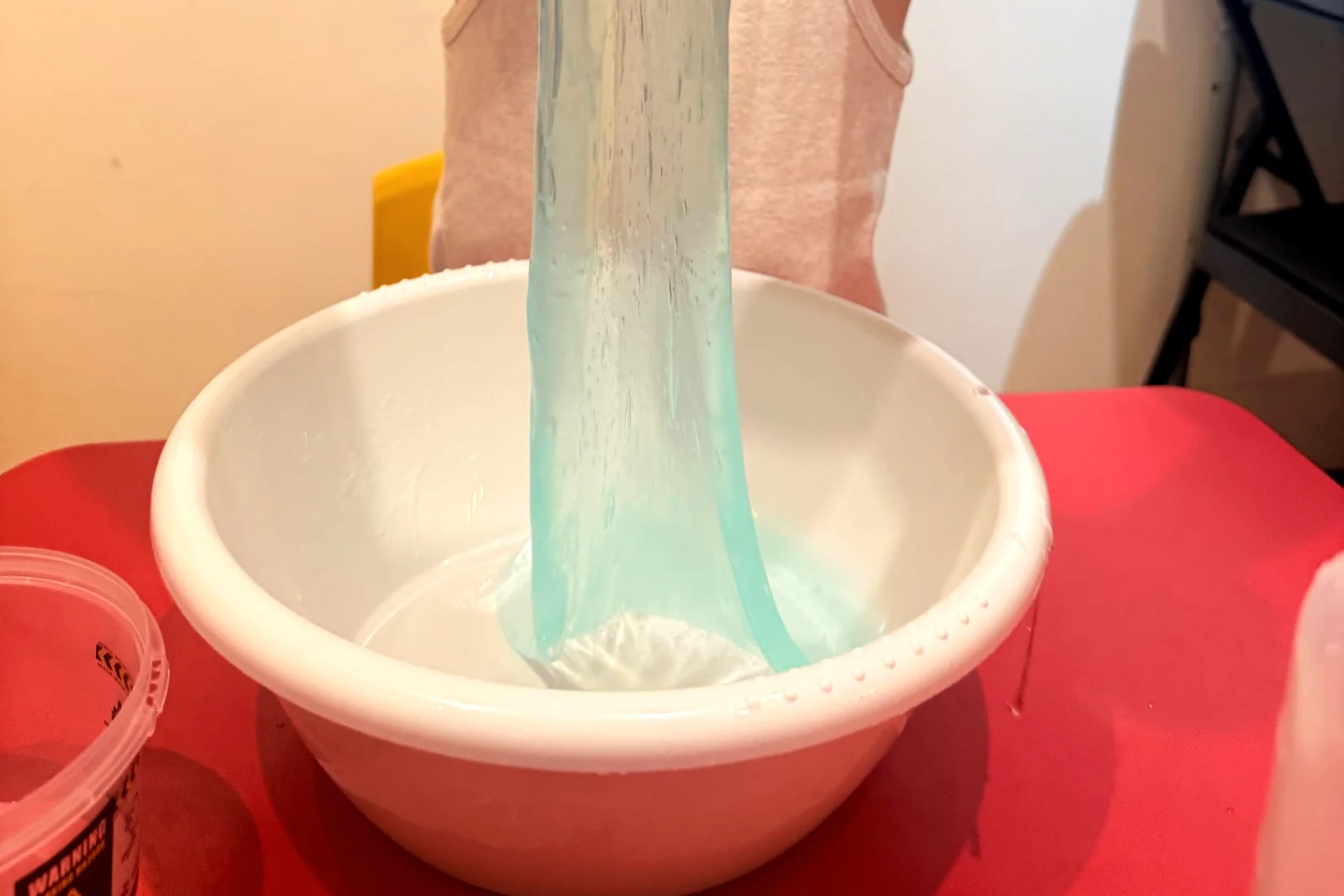
The best part for many: lifting slime as high as their arms could go and watching it stretch down into the bowl.
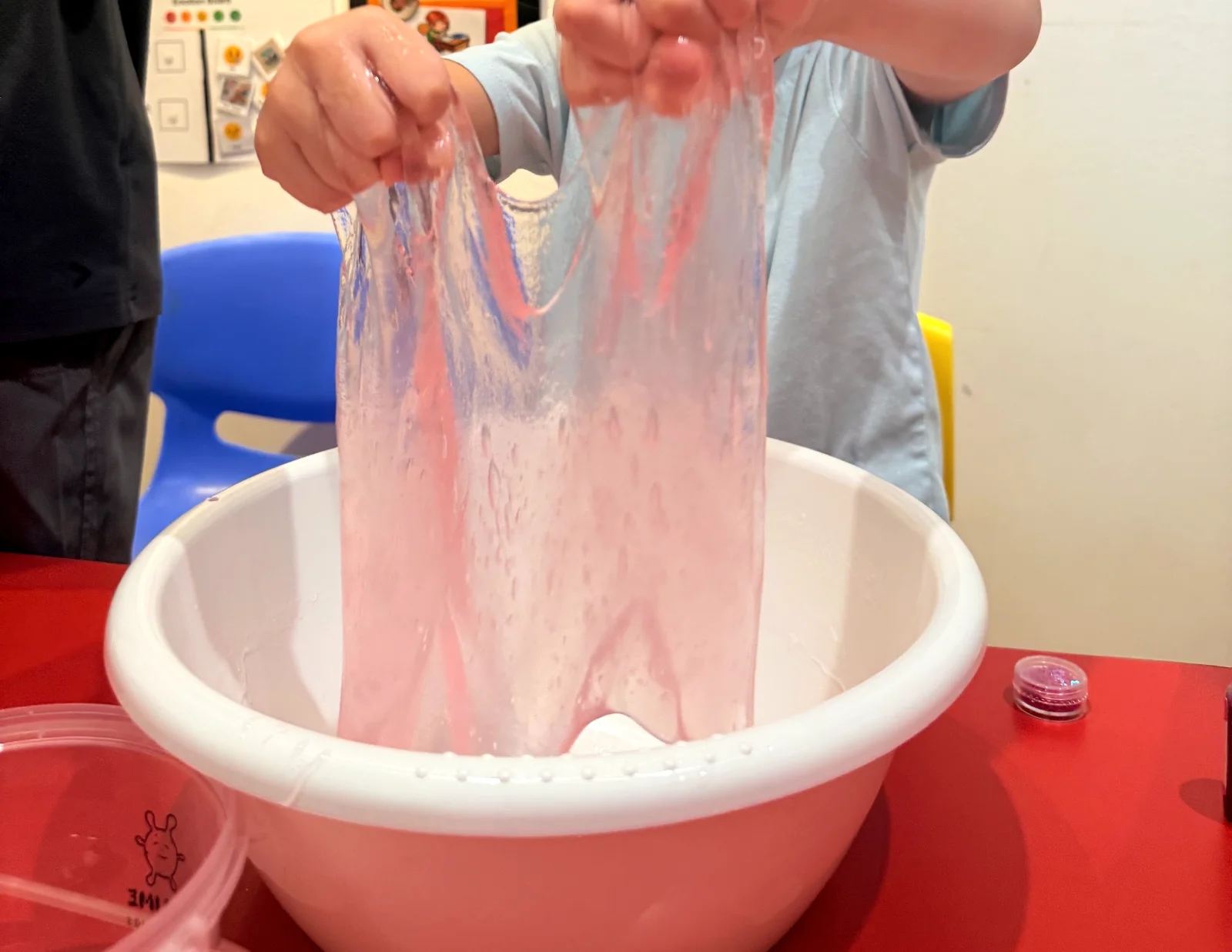
Why this helps: stretching and pulling give strong, calming input to the hands and arms, which can help some children feel more settled.
“One child would only use a spoon at first. Twenty minutes later, both hands were deep in the bowl.”
— Jiaying, Associate Early Years Lead at ONE
“Messy play looks like just fun, but it is great practice in following steps and trying new textures.”
— Grace Teo, Founder and Child Psychologist at ONE
If your child avoids messy play: a gentle step-by-step plan
Many children we work with find sticky, wet or slimy textures hard. That is a real sensory difference, not fussiness. Instead of pushing, we climb a small ladder, one step at a time:
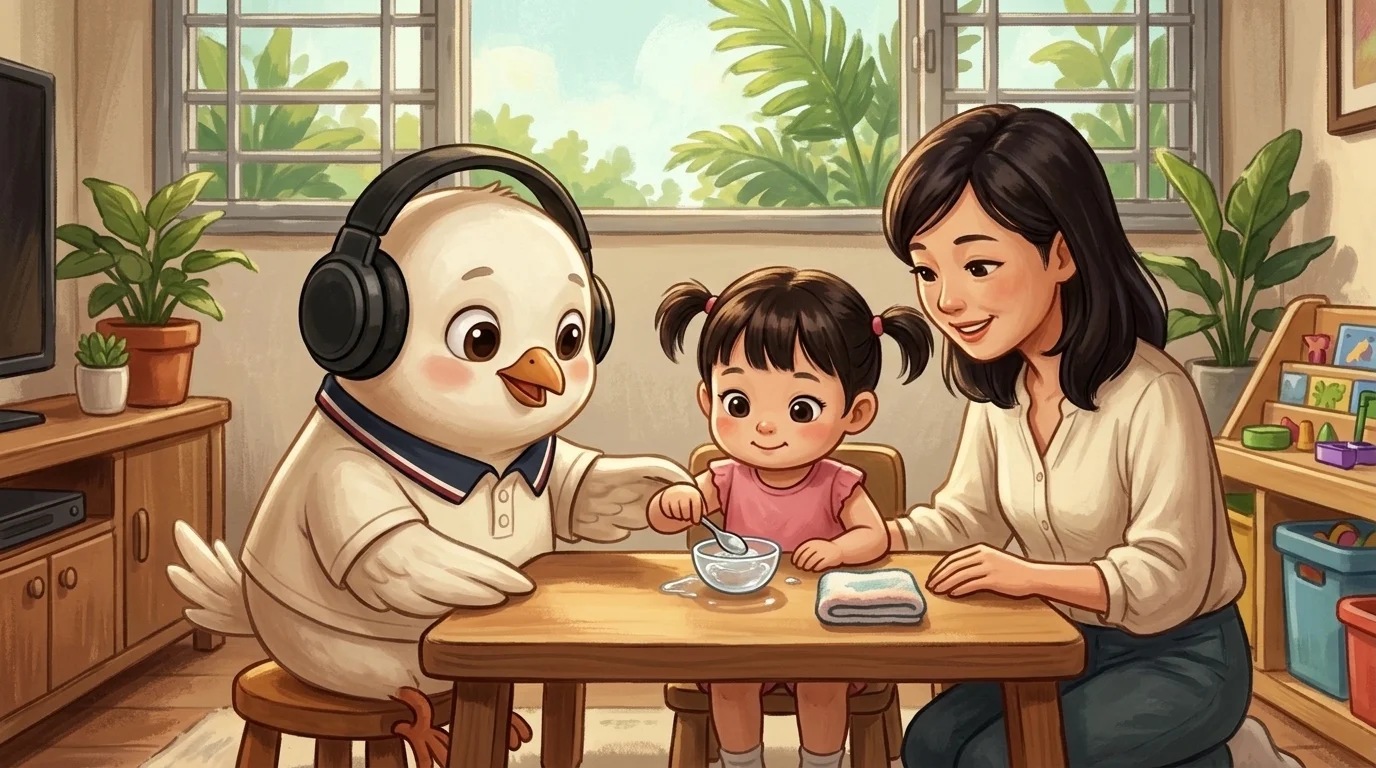
- Watch. Your child sits nearby while you play. Watching counts.
- Use a tool. A spoon, a stick or a cookie cutter, so hands stay clean.
- One finger. A quick poke, then a wipe. Keep a towel right there.
- Whole hand, inside a bag. Put slime in a zip bag and squish it from outside.
- Hands in. Only when your child is ready, and only for as long as they like.
Stay on each step for as many days as your child needs. Praise the trying: “You touched it with one finger. Brave!”
ONE teacher tip
Say what will happen before it happens: “It will feel cold and soft. You can wipe it off any time.” Knowing there is a way out makes it easier to try.
If your child strongly avoids many textures, sounds or smells, read more about sensory needs and how we help.
Trying slime at home: keep it safe and calm
- Use a ready-made kit or a recipe made for children, and follow it carefully.
- Supervise all the time, especially with young children who may put things in their mouth.
- Cover the table and keep wipes close, so mess does not become stress.
- Wash hands before and after playing.
- Stop if skin looks red or itchy, and check with your doctor if you are unsure.
Looking for more ideas? See our earlier article on slime play with children.
Free printable
Easy sensory play recipes with step-by-step pictures, for calm, messy fun at home. Get the free PDF
How ONE helps
Sensory activities like slime are part of how we help children at ONE learn to explore, communicate and stay regulated. Our Early Intervention and School Readiness programmes build these skills through play, and our school holiday programme adds special guests and outings.
Would you like your child to learn through real outings like this? WhatsApp us to visit our centre, 5 minutes’ walk from Eunos MRT.
Questions parents ask
My child hates sticky hands. Is slime a bad idea?
Not necessarily. Start very small: let your child watch, poke with a stick, or touch with one finger, and always allow a quick hand wipe. Never force it.
What skills does slime play build?
Following instructions, hand strength, trying new textures, asking for what you want and taking turns, all in one activity.
Is slime safe for young children?
Use kits or recipes made for children, supervise closely, and wash hands after play. Keep slime away from mouths and eyes.
Why does my child refuse to touch slime, sand or paint?
Some children feel textures much more strongly than others. Go slowly with the step-by-step plan above, never force it, and talk to a professional if it affects eating, dressing or daily life.
This article is general information, not a diagnosis or medical advice. If you are worried about your child, speak to your paediatrician or polyclinic doctor.