Quick look
Halloween 2026 at ONE ran over two days. On Thursday 29 October our children explored a dim, fairy-lit spooky room with torches, and on Friday 30 October everyone came in costume for a parade, a Halloween writing activity, ghost-face snacks and an evening trick-or-treat walk. Our teachers dressed up too.
Last year’s party was such a hit that our children started asking about Halloween in September. This year we spread the fun over two days, so nobody had to do everything at once, and every child could choose how spooky (or not spooky) they wanted it to be.
Day 1: the torch-lit spooky room
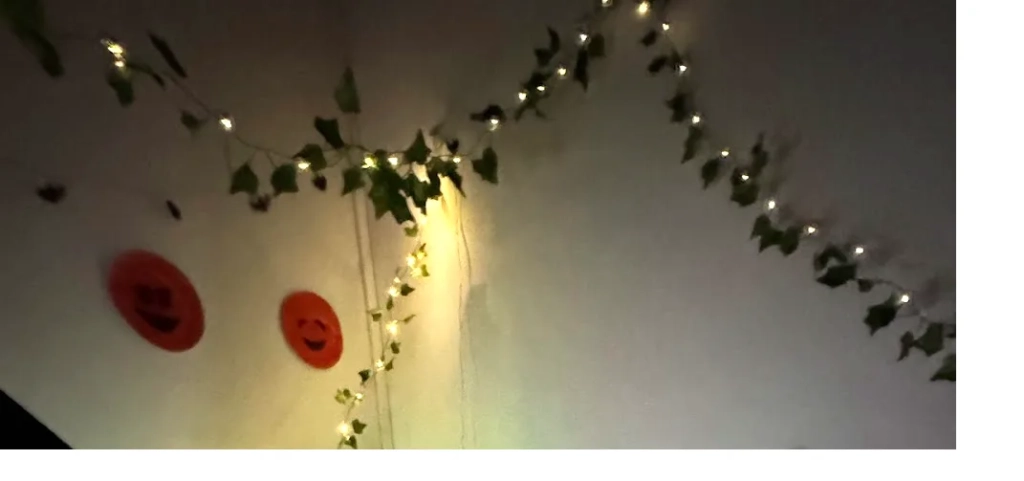
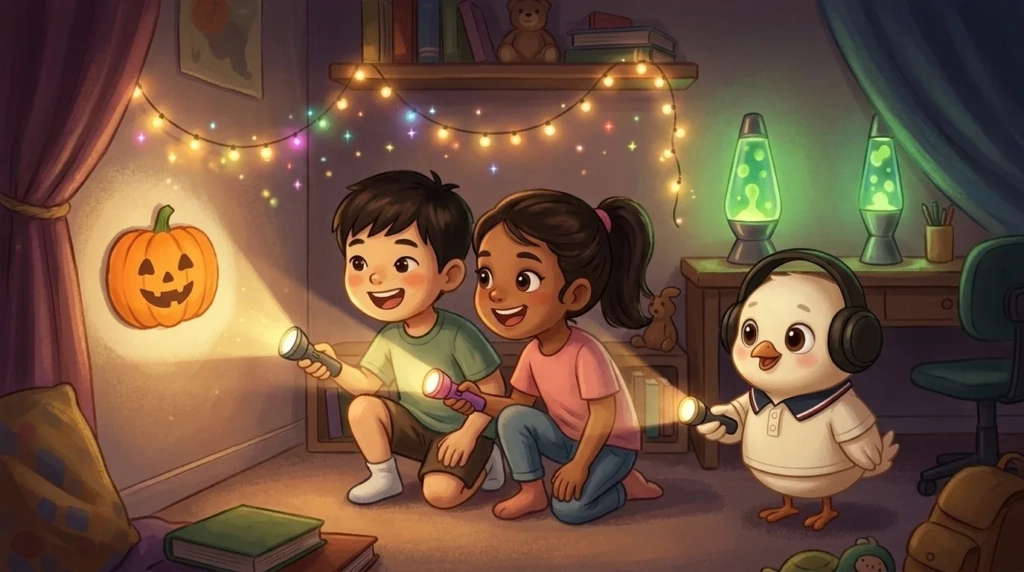
On Thursday morning, one of our rooms became a “spooky room”: ivy and fairy lights on the walls, smiling paper pumpkins and a glowing green lava lamp. In small groups, children went in with a teacher and a torch to find hidden pumpkins and surprises.
Why this helps: a dim room with a torch is a safe way to practise being a little brave. Children decide when to step in, follow simple directions (“shine your torch up high”), and share what they found with their friends afterwards. The lights stayed on outside the room, and anyone could step out at any time.
Day 2: costumes and a doorway parade
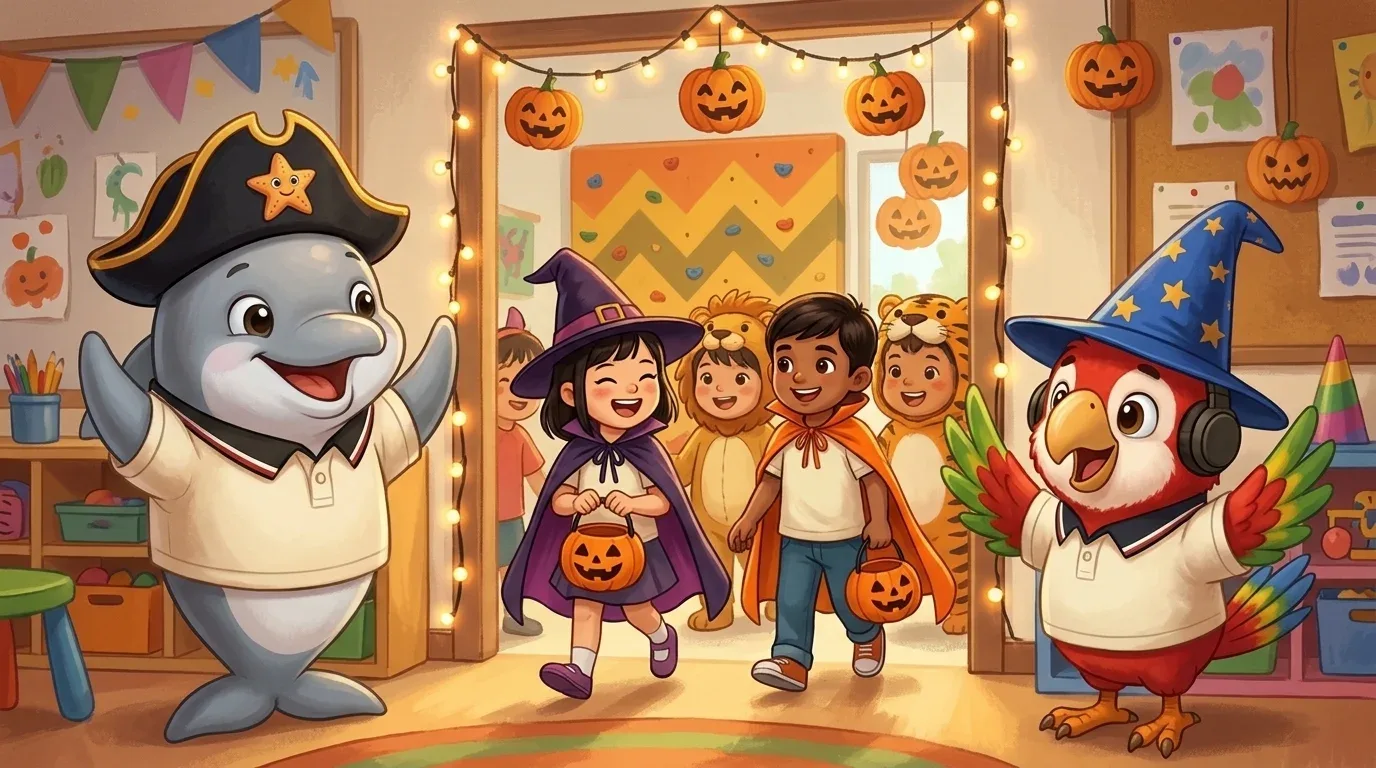
On Friday, the costumes came out: little witches, a pumpkin cape, superheroes, a bunny or two and plenty of glow sticks. Each child had their own moment at the classroom door, holding their pumpkin bucket and showing off their costume while friends and teachers clapped.
Why this helps: walking up, waiting for a turn and saying “trick or treat!” to a teacher is a gentle social script that children can practise again and again, and the cheering builds confidence.
Our teachers dressed up too
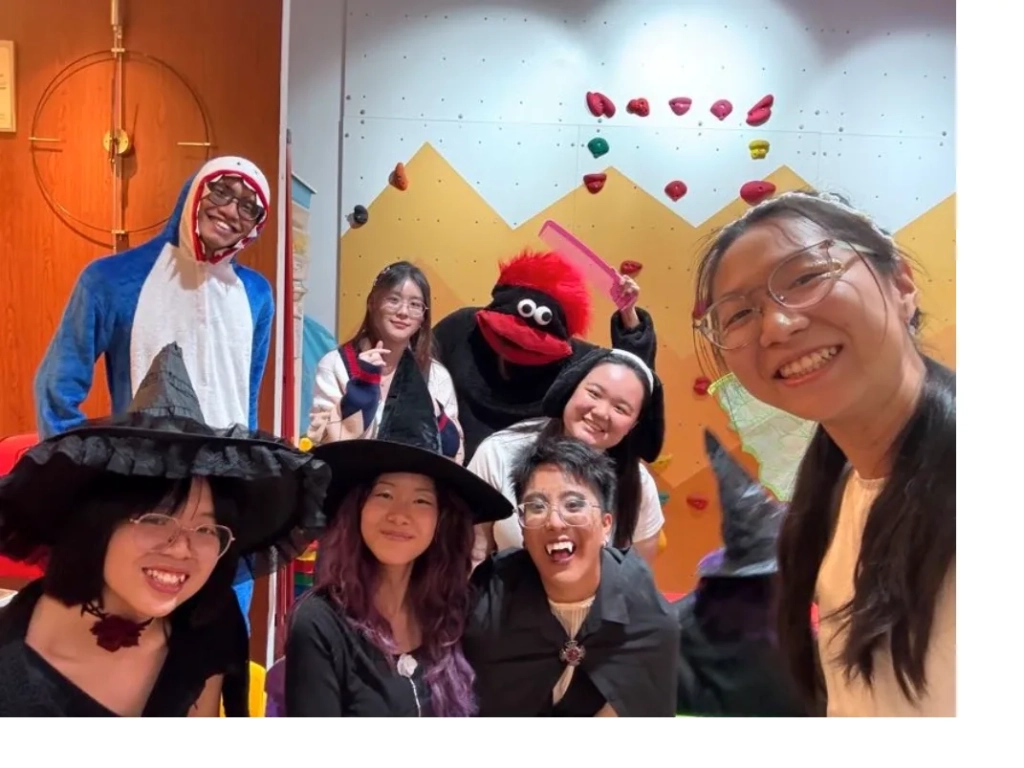
From a shark onesie and a vampire cape to witches’ hats and our very own furry red monster, the ONE team went all out. Seeing familiar adults in costume, while still sounding like themselves, helps children learn that costumes are just pretend.
Writing about Halloween
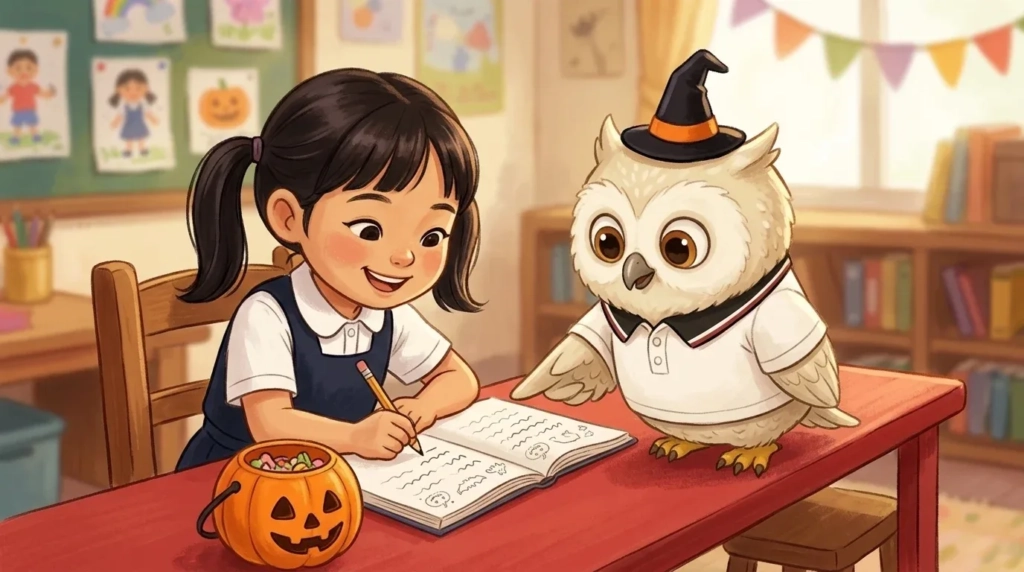
Our older children turned the day into learning. After looking at pictures of how Halloween is celebrated around the world, they wrote a few sentences about their own costume and what they enjoyed most, with a pumpkin bucket of “rewards” waiting on the table.
Why this helps: writing about something exciting that really happened gives children real words to use, and it is much more motivating than a worksheet.
Ghost-face snacks
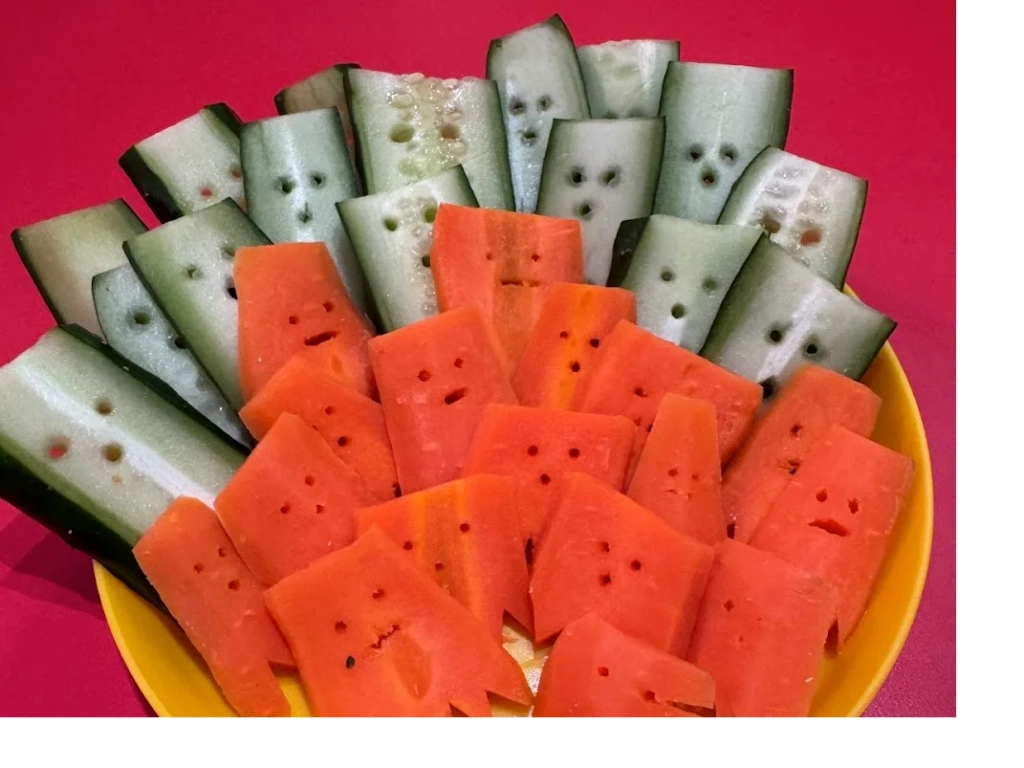
Our snack plate was made of carrot and cucumber “ghosts” with little poked-in faces. It is a fun way to make vegetables less scary for picky eaters: when a carrot has a face, many children want to look at it, touch it and even give it a nibble.
ONE teacher tip
Try ghost-face vegetables at home: cut carrot or cucumber into strips and poke two eyes and a mouth with a chopstick. Let your child make the faces, and don’t pressure them to eat. Touching and smelling count as wins.
The evening trick-or-treat walk
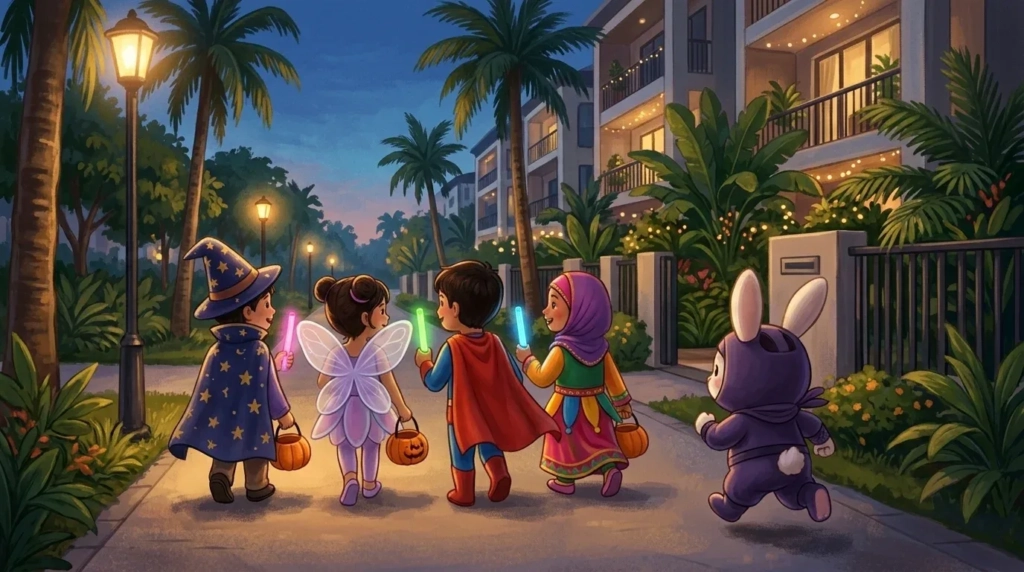
As it got dark, we headed out for a short trick-or-treat walk with glow sticks and pumpkin buckets, holding hands in pairs with our teachers and parents. Children practised waiting their turn, saying “trick or treat” and “thank you”, and walking safely together near the road.
Why this helps: walking in pairs near the road, waiting for a turn and using short polite phrases are real-life safety and social skills, practised with friends.
How we kept it fun, not frightening
- Two calmer days instead of one big one: fewer activities at a time, so children were not overloaded.
- Choice, always: every activity was optional, and watching counted as joining in.
- Small groups in the spooky room, with a teacher and a torch, and the door open.
- Gentle costumes: nothing gory, and children could come in normal clothes.
- Small groups: at most 1 teacher to 3 children, so every child had an adult close by.
If your child finds celebrations hard, our free Calm-Kit and feelings cards can help you prepare.
“Some children only peeked into the spooky room at first. By the end of the morning, they were leading their friends in with the torch.”
— Jiaying, Associate Early Years Lead at ONE
“Seeing us in costume made the children laugh, and it helped them understand that costumes are just pretend.”
— Dickson, Associate Centre Lead at ONE
Let your child peek first
For dim rooms, costumes and surprises, watching first is a big part of joining in. We always let children choose how close to go.
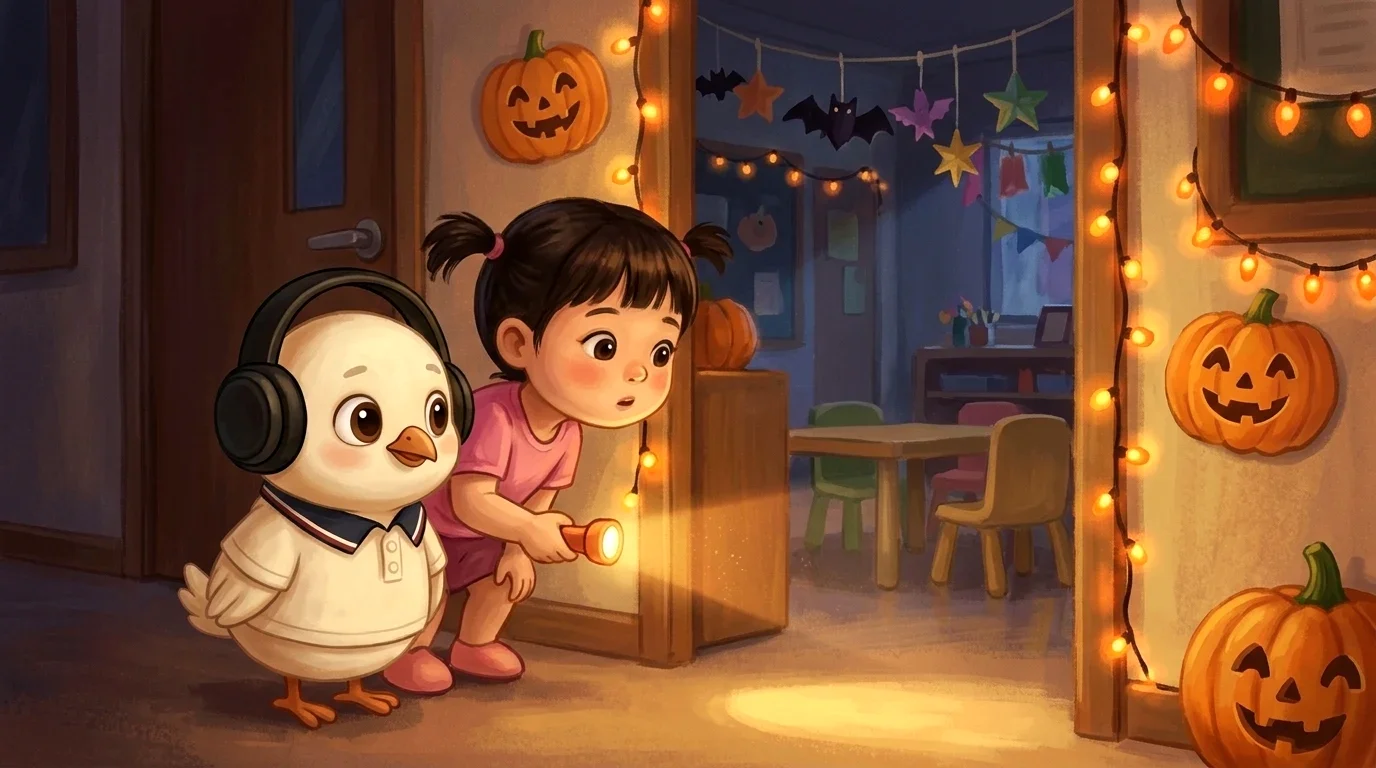
- Stand at the doorway together and look in.
- Hold a torch or a familiar toy.
- Agree a signal for “let’s go out”, and use it if needed.
If celebrations make your child worried, read more about worries and shyness and how we help.
Free printable
Party Break Cards and Party Plan
Picture cards for parties and celebrations: what will happen, how I feel, and “I need a break”. Get the free PDF
Questions parents ask
Do children have to join every Halloween activity?
No. Every activity is optional. Children can watch, try it with a teacher, or take a break somewhere quiet.
My child is scared of the dark. Was the spooky room too much?
It was dim, not dark, with fairy lights and torches, a teacher alongside, and the door open. Children could peek in from the doorway or skip it altogether.
Can we visit ONE to see what a normal day looks like?
Of course. WhatsApp us to book a centre visit at Hexacube or Centropod, both a 5 min walk from Eunos MRT.
How do I prepare my child for a Halloween party?
Show pictures of costumes and decorations beforehand, keep costumes gentle, plan a quiet break spot, and let your child watch before joining in.