
Who we help › Delayed milestones
Delayed milestones & developmental delay
Delayed Milestones & Developmental Delay: Help in Singapore
Walking, talking, playing or self-care coming later than expected? We set small, clear goals in every area, so you can see progress week by week.
📍 Eunos, Singapore · 5 minutes from Eunos MRT, easy to reach from Paya Lebar, Bedok and Geylang
✓ Reviewed by Grace Teo, child psychologist (Master’s in Educational Psychology) · November 2026

What you’re noticing
Signs of developmental delay you might notice
Milestones are a guide, not a race. What matters is steady progress, and that’s what we track.
- Sitting, crawling or walking came later than expected
- Few words, or not yet putting words together
- Plays differently from other children the same age
- Needs a lot of help with eating, dressing or toileting
- Has been diagnosed with global developmental delay (GDD)
Understanding it
What is global developmental delay?
Developmental milestones are a guide, not a race, but a delay in two or more areas deserves a closer look. At ONE in Singapore, our child psychologist sets goals across all 7 Pillars at once, because movement, communication, play and self-care all build on each other.
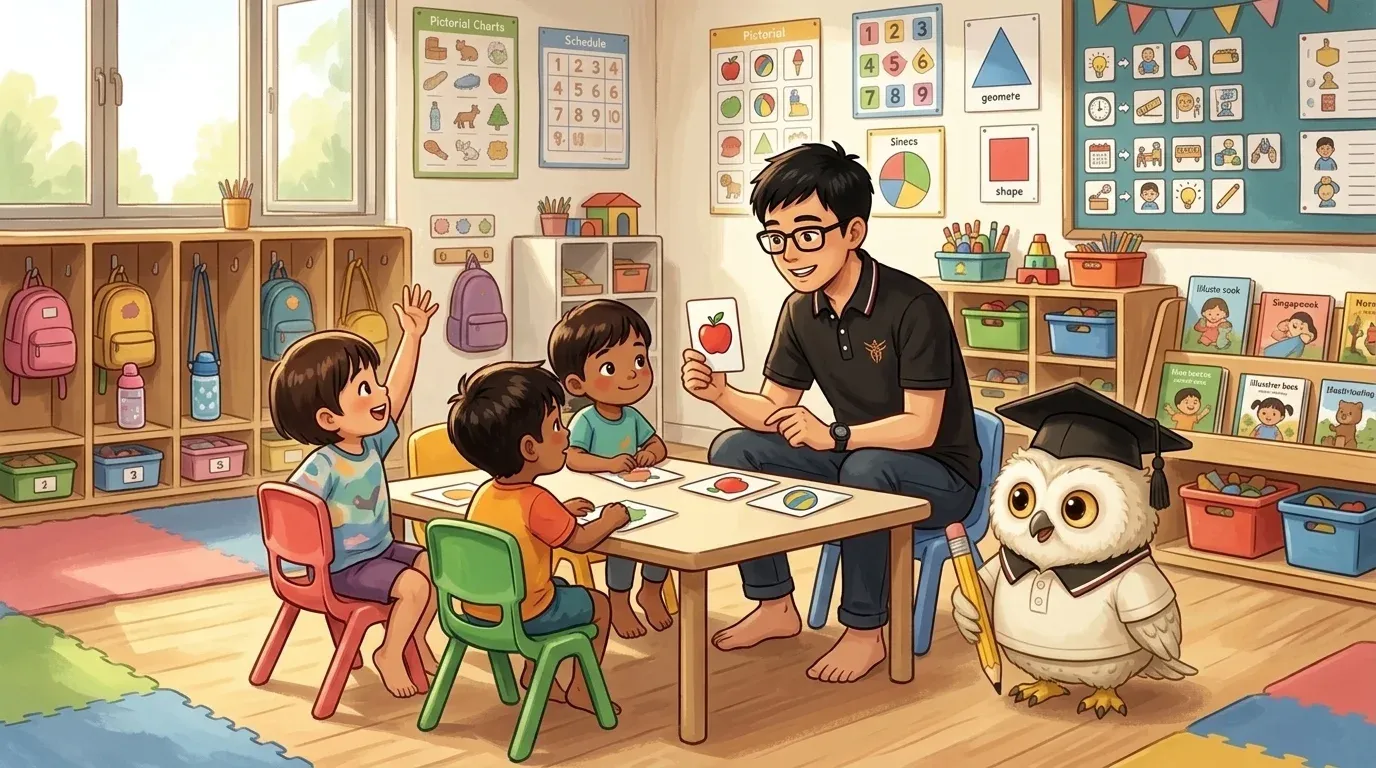
Methods we useVisual supports, TEACCH routines, Structured tabletop activities and more
When should I be worried about delayed milestones?When several skills are late, or skills are lost.
Speak to your doctor if your child isn’t sitting by 9 months, isn’t walking independently by 18 months, isn’t using meaningful words by 18 months, isn’t joining two words by 2, loses skills they had, or if you’re worried at any age. A developmental check can look for medical causes and open the door to support.
What is global developmental delay?A delay in two or more areas in a young child.
Global developmental delay (GDD) is a term doctors use for young children, usually under 5 or 6, who are behind in two or more areas such as movement, speech, thinking or social skills. It describes where a child is now, not where they’ll end up.
How ONE helps
Where we often start
Every child has goals in all 7 Pillars of Growth, set at the placement assessment. For delayed milestones, we often start here.


Programmes that fit
Where your child could start
Our psychologist recommends the right fit after meeting your child.
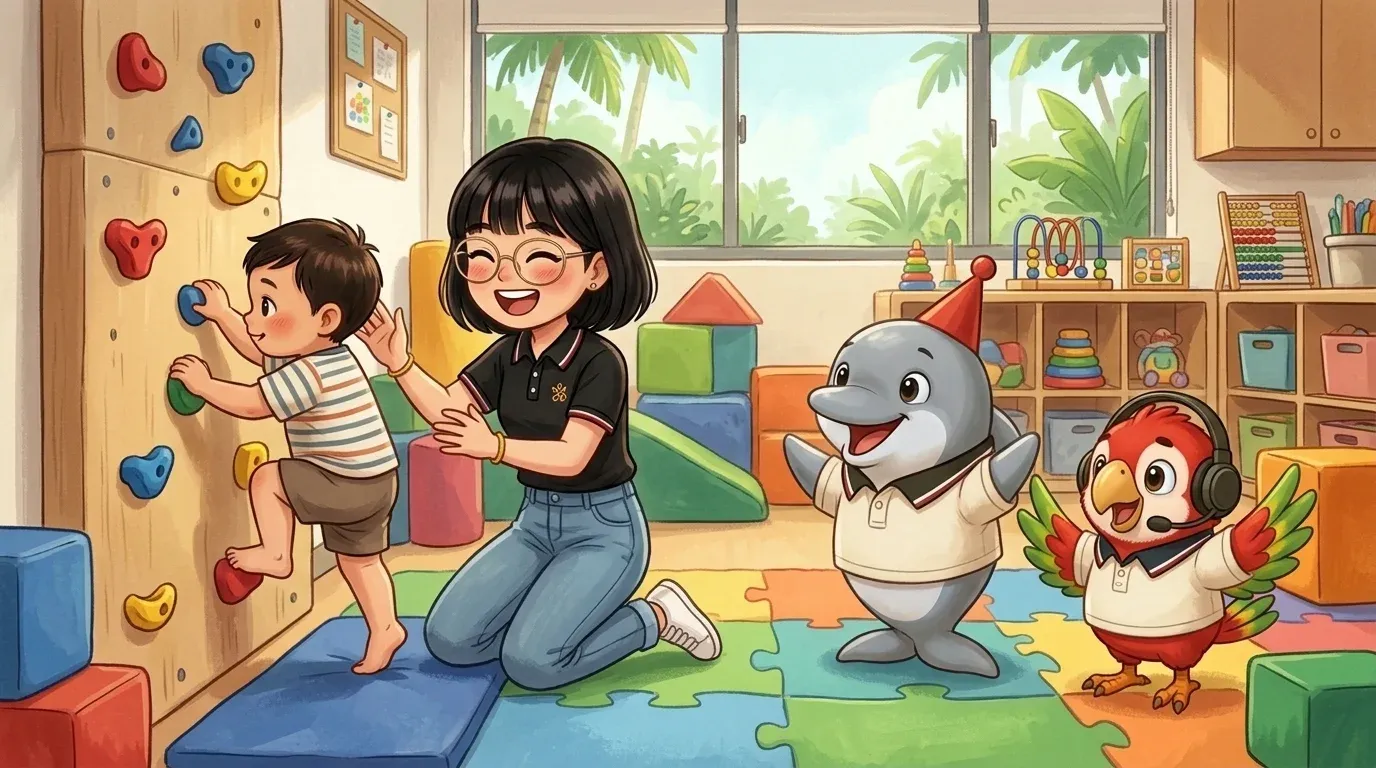 18 months – 6Early InterventionGoals in every pillar through play, 18 months to 6See the programme
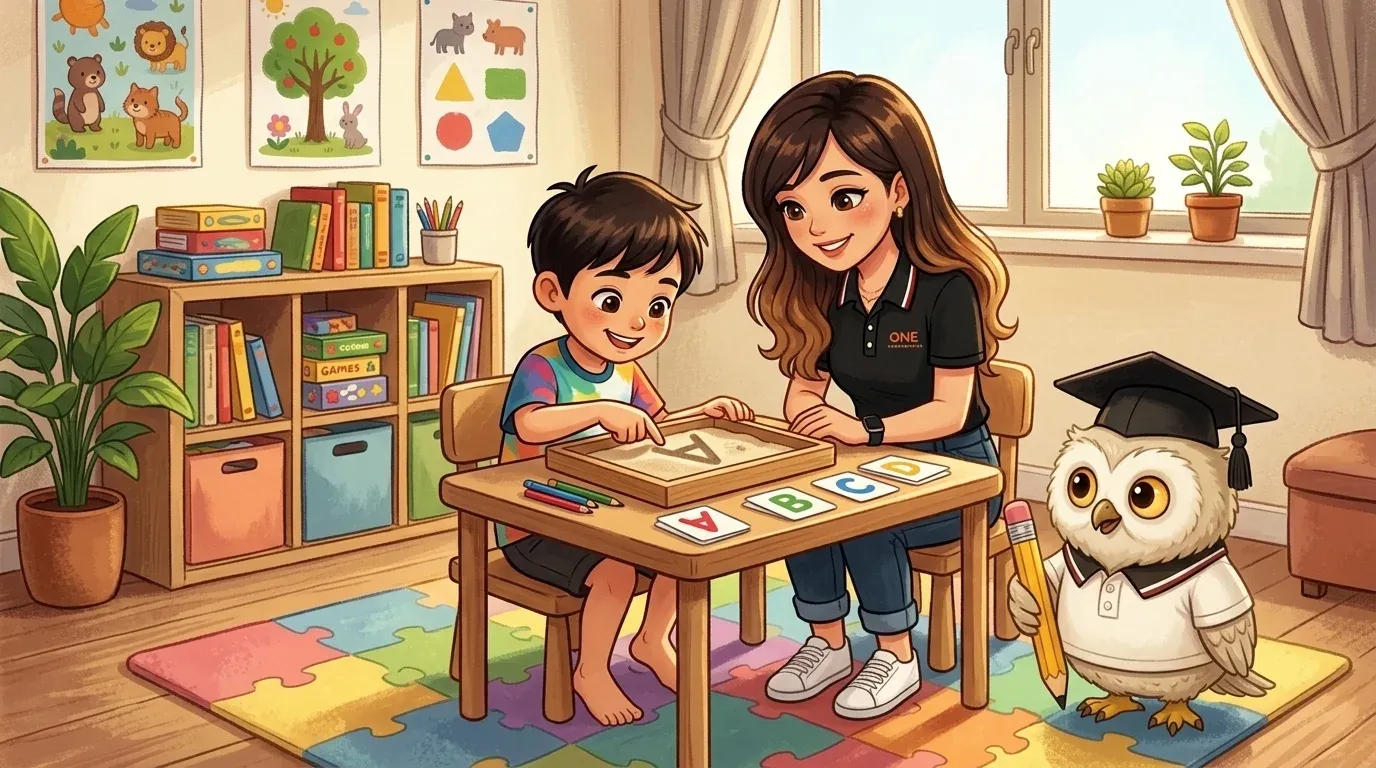 All ages1:1 Education TherapyOne-to-one at your child’s pace. Under-2s usually start hereSee the programme
 Under 7School ReadinessClassroom routines and early learning, getting ready for Primary 1See the programme
Getting a diagnosis
Getting a developmental assessment in Singapore
You don’t need a diagnosis to start at ONE. If you’d like a formal assessment, this is the usual route.
Your doctor will advise on the best route for your child’s age. Source: KK Women’s and Children’s Hospital, Department of Child Development.
Try at home
Three things you can start today
FAQ
Questions parents ask
How do I know if my toddler is developmentally delayed?
Compare your child with typical milestones, but look at the overall pattern rather than one skill. If your child is behind in several areas, such as moving, talking, playing and self-care, or has lost skills, ask your doctor for a developmental check.
What are red flags for a 2-year-old?
At 2, speak to your doctor if your child isn’t walking steadily, uses fewer than about 50 words or no two-word phrases, doesn’t point to show you things, doesn’t copy actions or words, or has lost skills.
Is a delayed milestone curable?
Developmental delay isn’t an illness to cure, and outcomes depend on the cause. Many children make strong progress with early, consistent support. We can’t promise a timeline, but we do promise clear goals, weekly scores and an honest monthly report.
Is GDD the same as intellectual disability?
Not necessarily. GDD describes delays in young children. Some children catch up; for others a different diagnosis becomes clearer as they grow. Your doctor will review it over time.
My child is under 2. Can they start?
Yes. Early Intervention starts at 18 months, and 1:1 is open to all ages. Under-2s usually start with 1:1.
Does my child need a diagnosis?
No. Many families come to us before any assessment.
What happens next
Four simple steps
No commitment until you’ve met us.
Every child grows at their own pace.
You don’t have to figure it out alone. Visit either centre and meet the team.
★ 5.0 on Google · We usually reply the same working day