
Who we help › Sensory needs
Sensory needs
Sensory Processing Difficulties in Children: Support in Singapore
Covering ears, refusing clothes, or always on the go? Some children feel the world more strongly, or less. We help them feel settled and ready to learn.
📍 Eunos, Singapore · 5 minutes from Eunos MRT, easy to reach from Paya Lebar, Bedok and Geylang
✓ Reviewed by Grace Teo, child psychologist (Master’s in Educational Psychology) · November 2026
What you’re noticing
Signs of sensory processing difficulties
Sensory differences are real, not naughtiness. With the right support, children cope with more, and enjoy more.
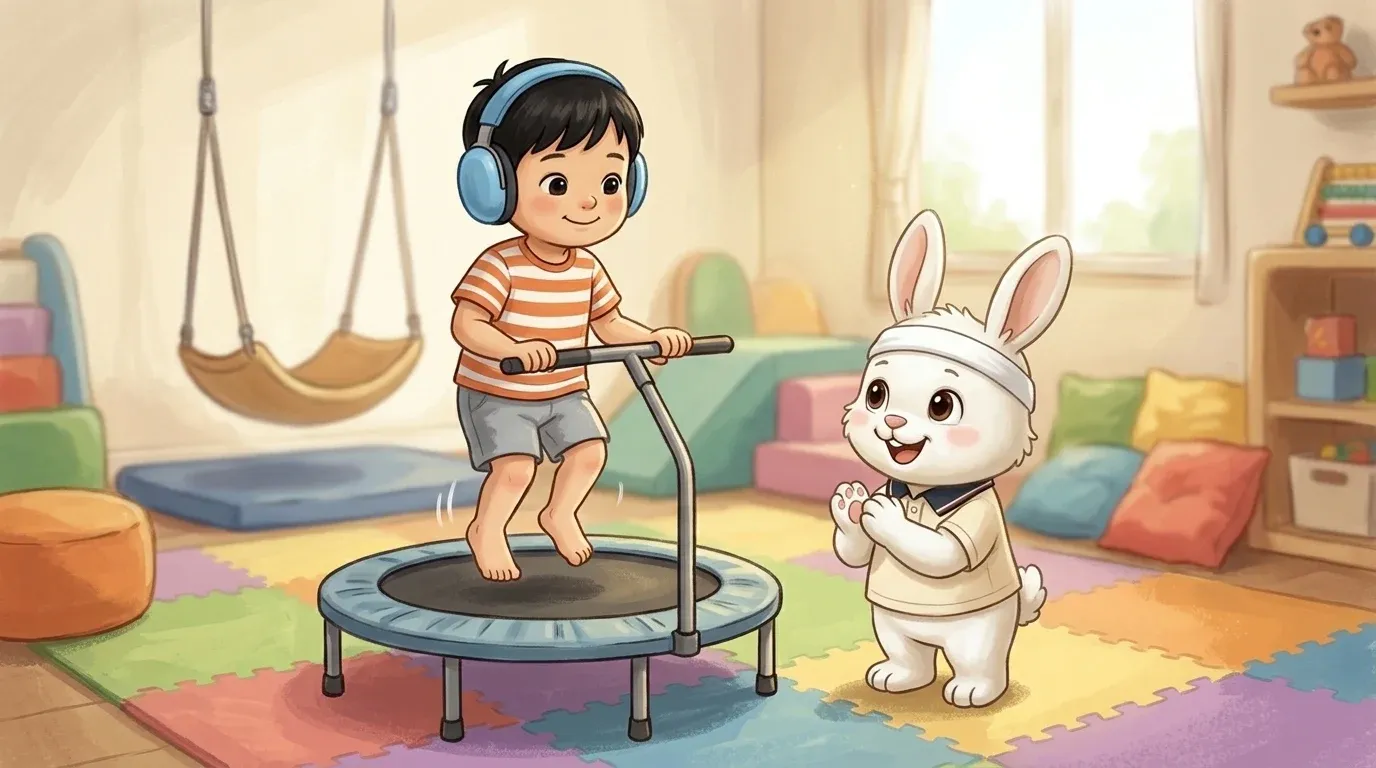
- Covers ears at everyday sounds, or is upset in busy places
- Avoids certain clothes, textures, haircuts or tooth-brushing
- Eats only a few foods
- Is always jumping, crashing or spinning
- Doesn’t seem to notice bumps, mess or being called
Understanding it
Why sensory differences matter
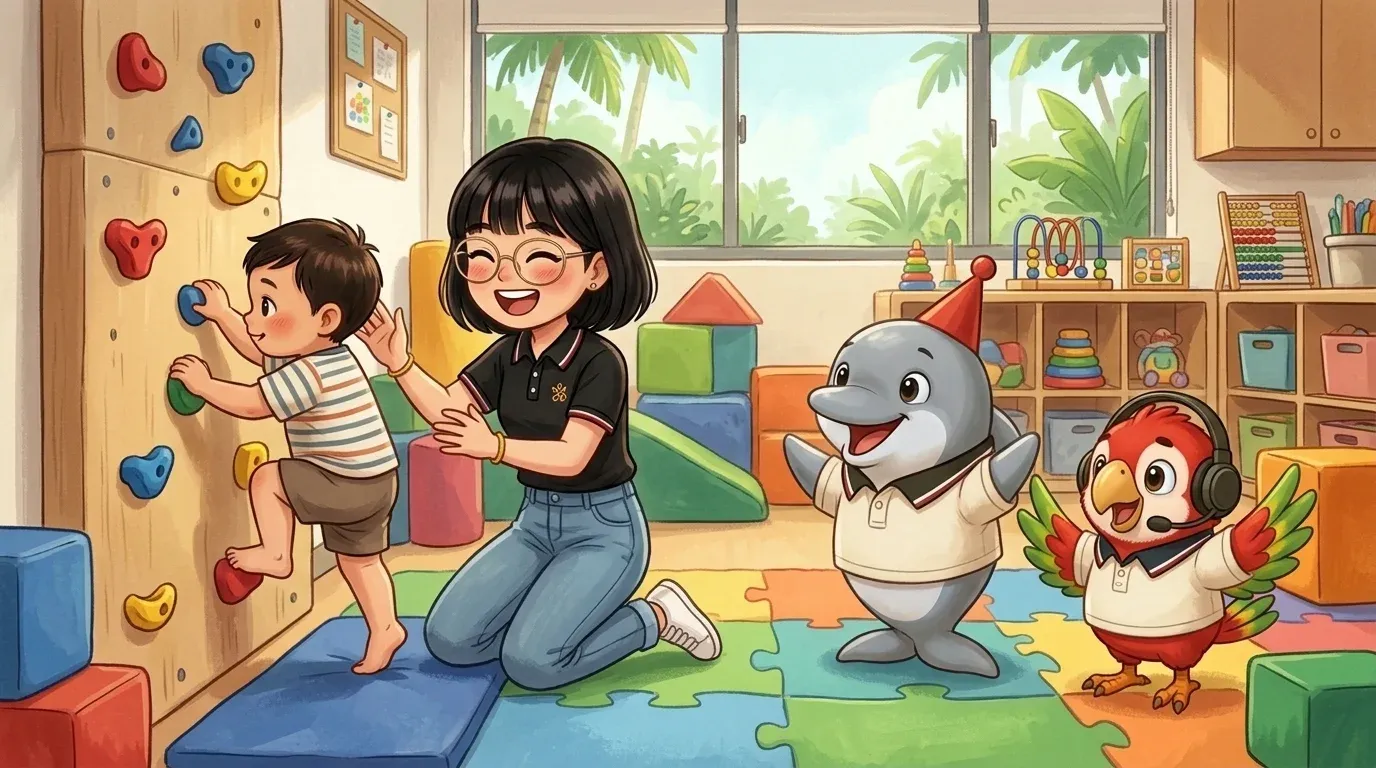
Every child processes sound, touch, taste, movement and balance a little differently. Some are over-responsive and get overwhelmed easily; others seek more input; many have a mix. At ONE in Singapore, we build movement and calming routines into every session, using our trampoline gym, climbing wall and quieter spaces, so your child can focus, play and learn.
How can I help a child with sensory processing difficulties?Predictable routines, movement breaks and preparation.
Notice what your child avoids or seeks, then plan around it: movement before focused tasks, ear defenders for noisy places, warning before changes, and gentle, pressure-free practice with new textures and foods. Small, regular adjustments usually help more than big changes.
Can children grow out of sensory processing difficulties?Many find it easier to cope as they grow.
With age, support and strategies, many children find sensory differences easier to manage, though some sensitivities can continue. Learning what helps their body feel calm is a skill that lasts.
How ONE helps
Where we often start
Every child has goals in all 7 Pillars of Growth, set at the placement assessment. For sensory needs, we often start here.


Programmes that fit
Where your child could start
Our psychologist recommends the right fit after meeting your child.
 18 months – 6Early Intervention
 All ages1:1 Education Therapy
 All agesWeekend Social Learning Group
Try at home
Three things you can start today
FAQ
Questions parents ask
What are the signs of sensory processing difficulties in a 4-year-old?
Common signs include covering ears at everyday sounds, distress at haircuts, tooth-brushing or certain clothes, eating very few foods, constant jumping, crashing or spinning, and not noticing bumps or mess. One sign alone isn’t a concern; a pattern that affects daily life is worth checking.
Is this sensory processing disorder?
Sensory processing difficulties aren’t a separate diagnosis in the main diagnostic manuals, but they’re real and very common. We focus on what helps your child day to day.
How are sensory issues linked to autism and ADHD?
Sensory differences are very common in children with autism and also in children with ADHD, but they can happen on their own too. Helping a child regulate their senses often makes focus, behaviour and learning easier.
What sensory equipment do you have?
A trampoline gym at Centropod, our own climbing wall at Hexacube, and quieter spaces for breaks.
Does ONE provide occupational therapy?
No. We build sensory and movement goals into our programmes. If your child sees an occupational therapist, we include their strategies in our sessions.
Does my child need a diagnosis?
No. We start from what you’re noticing.
What happens next
Four simple steps
No commitment until you’ve met us.
Every child grows at their own pace.
You don’t have to figure it out alone. Visit either centre and meet the team.
★ 5.0 on Google · We usually reply the same working day