Quick answer
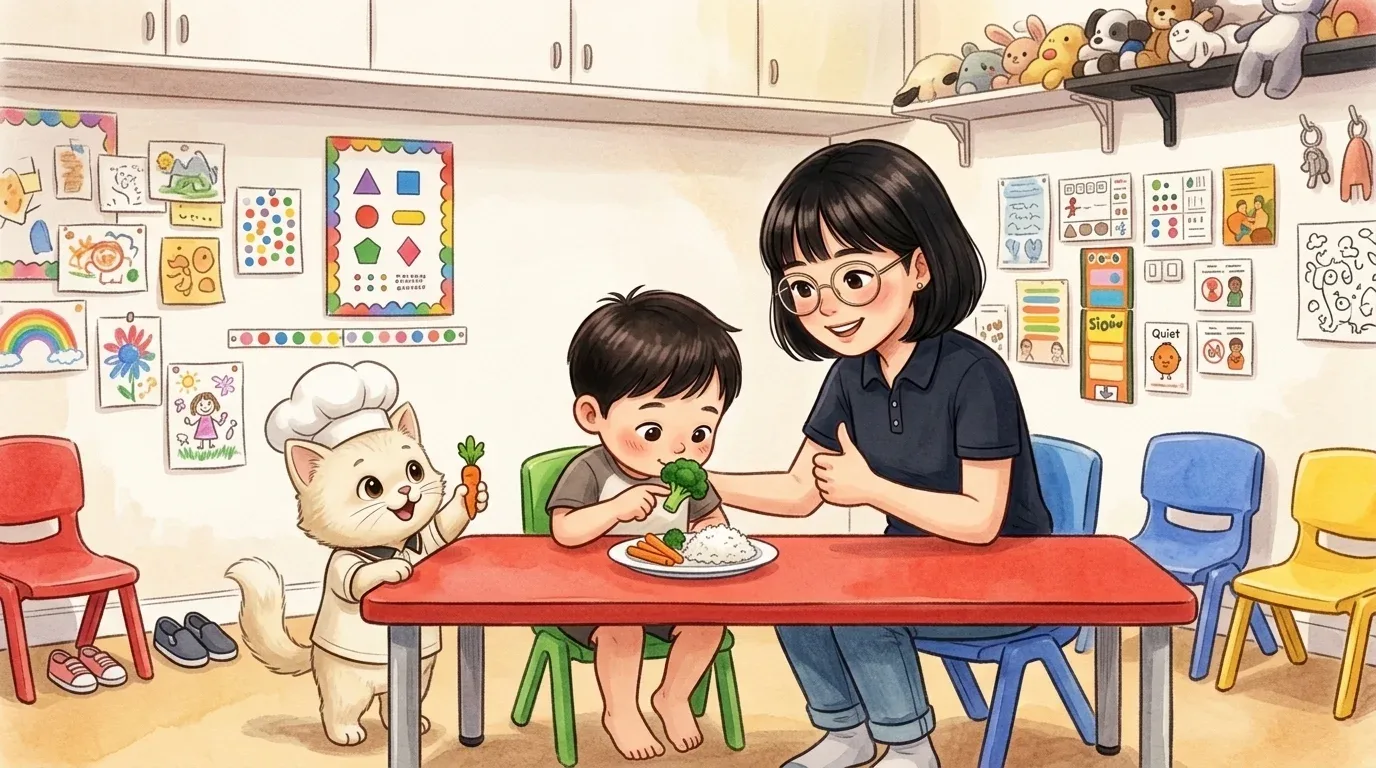
Most picky eating is a normal stage between ages 2 and 6. Speak to your doctor if your child eats fewer than about 20 foods, is losing weight or not growing, gags or vomits often, or gets very distressed at meals. At home, offer new foods often with no pressure, keep one “safe” food on the plate, and eat together.
White rice. Plain bread. Chicken nuggets, but only one brand. Anything green? Cannot.
If dinner at your house feels like a hostage negotiation, you are not alone. Picky eating is one of the most common worries we hear from parents, and also one of the most stressful, because food feels like love.
Here’s the good news: most picky eating is a phase. Here’s the honest news: sometimes it’s a sign that a child needs more help. This guide shows you how to tell the difference.
In this article
Picky eating is normal (up to a point)
Between about 2 and 6, many children become suspicious of new foods. Scientists call it food neophobia, and it probably kept toddlers safe from eating random berries back in the day.
Children also need to see and taste a new food many times, often 8 to 15 tries, before they accept it. So “he tried it once and spat it out” is not the end of the story. It’s the start.
Picky eater checklist: is this typical?
Tap each one that sounds like your child.
If you ticked most of these, it sounds like typical picky eating. Keep going with the tips below, and check the red flags next.
When to worry: signs to speak to a doctor
Talk to your paediatrician or polyclinic doctor if you notice any of these:
- Your child eats a very small range of foods (fewer than about 20) and the list keeps shrinking.
- They are losing weight, not growing as expected, or often tired and unwell.
- They gag, choke or vomit often, or meals are painful.
- They refuse whole food groups (for example, all fruit and vegetables, or all protein).
- Meals cause extreme distress: screaming, running away, or panic at the sight of a new food.
- Eating difficulties come with other worries, such as late talking, strong sensory sensitivities or rigid routines.
Your doctor may refer you to a dietitian, a feeding specialist or a speech therapist who works with feeding. ONE is not a feeding therapy provider, but we work alongside these professionals.
ONE teacher tip
Keep a simple food diary for one week: every food your child eats, even one bite. Bring it to your doctor. It turns “he eats nothing” into a clear picture.
Why some children are extra picky
- Sensory sensitivity. Some children feel textures, smells and temperatures more strongly. A lumpy porridge can feel truly unbearable.
- Need for sameness. Many children with autism feel safer with the same foods, same plate, same brand.
- Oral-motor skills. Chewing tough or mixed textures is hard work for some children, so they stick to soft, easy foods.
- Past bad experiences. Choking, reflux or being forced to eat can make meals feel scary.
What actually helps at home

- Take away the pressure. No bribes, no “one more bite”, no punishments. Pressure makes anxious eaters eat less.
- Always include one safe food. Put a food your child already eats on every plate, next to a small taste of something new.
- Tiny portions of new foods. One pea is less scary than a whole bowl.
- Play with food (yes, really). Touching, smelling, licking and even squashing a food are all steps towards eating it.
- Cook together. Washing vegetables or stirring the pot makes a food familiar.
- Eat together and model. Children copy what they see. Enjoy your food out loud.
- Keep a routine. Regular meals and snacks, and no grazing, so your child comes to the table a little hungry.
Picky eater food list: easy “bridge foods” to try
Start from a food your child already eats and change one small thing at a time. This is often called food chaining.
- Plain white rice → rice with a little soy sauce → plain fried rice → fried rice with tiny bits of egg
- Plain bread → toast → toast with butter → kaya toast or cheese toast
- One brand of nuggets → another brand → home-made chicken strips → chicken pieces from the family dish
- Plain crackers → crackers with a thin spread → crackers with soft cheese → small sandwich squares
- Apple juice → apple slices (peeled, thin) → apple with skin → pear slices
Free printable
Picky Eater Checklist and Bridge Foods List
Red flags, bridge food ideas and a food explorer log your child can tick. Get the free PDF
See it in real life
A Day at ONE: Pegboards, Snack Prep and the Playground (real photos from our classes)
How ONE helps picky eaters
At ONE, self-help skills such as eating are part of our 7 Pillars of Growth. During snack and lunch, our teachers gently help children explore new foods, one tiny step at a time, without pressure. We use pictures and routines to make mealtimes predictable, and we celebrate every step: looking, touching, smelling, tasting.
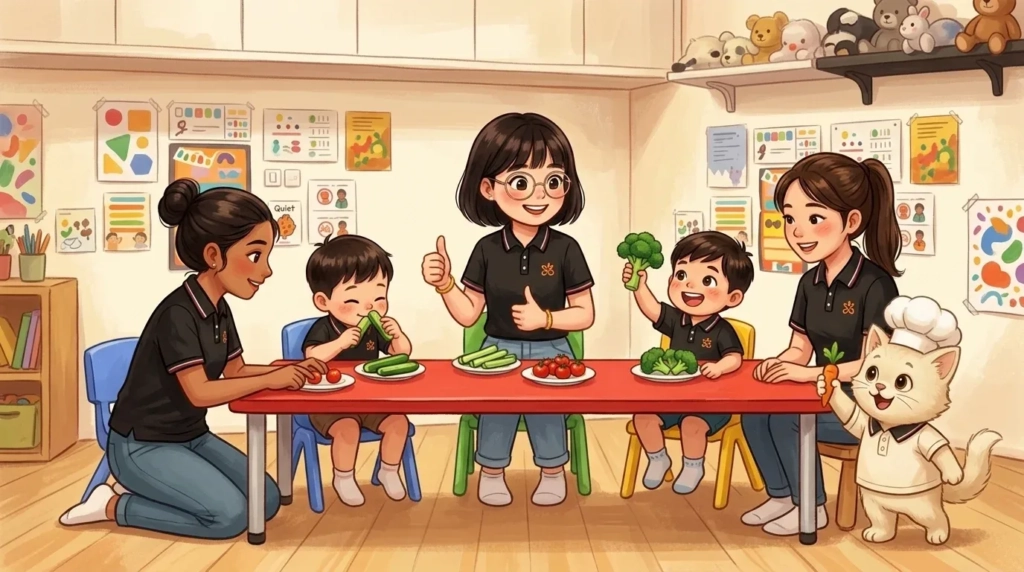
Each child’s goals are tracked weekly, and parents get a monthly progress report, so you see the small wins too. We also share simple ideas you can use at home so mealtimes feel calmer for the whole family.
Read more about how we support picky eating, or WhatsApp us to talk about your child. Our early intervention programme in Eunos is for children aged 18 months to 6.
Questions parents ask
Is a fussy eater toddler the same as a picky eater?
Yes. “Fussy eater” and “picky eater” mean the same thing. Most toddlers go through it; the red flags in this article tell you when to see a doctor.
At what age does picky eating usually stop?
Many children grow more adventurous from around 5 or 6. If the list of foods is shrinking instead of growing, check with your doctor.
Should I make my child finish everything on the plate?
No. Forcing usually backfires. You decide what is served and when; your child decides how much to eat.
Is picky eating a sign of autism?
Not on its own. Many children are picky eaters. But very restricted eating together with other signs, such as delayed talking or strong sensory sensitivities, is worth discussing with your paediatrician.
Can I hide vegetables in food?
It can help with nutrition, but also offer vegetables openly so your child learns to recognise and accept them.
Key takeaways
- Picky eating is common between 2 and 6, and new foods often need 8 to 15 tries.
- See a doctor if the food list is shrinking, growth is affected, meals cause gagging or panic, or there are other developmental worries.
- Pressure backfires. Offer new foods often, in tiny amounts, next to a safe food.
- Cooking together, playing with food and eating as a family all help.
Sources: HealthyChildren.org (American Academy of Pediatrics), picky eaters.
Written by the ONE Intervention team. This article is general information, not a diagnosis or medical advice. If you are worried about your child, speak to your paediatrician or polyclinic doctor.