Quick answer
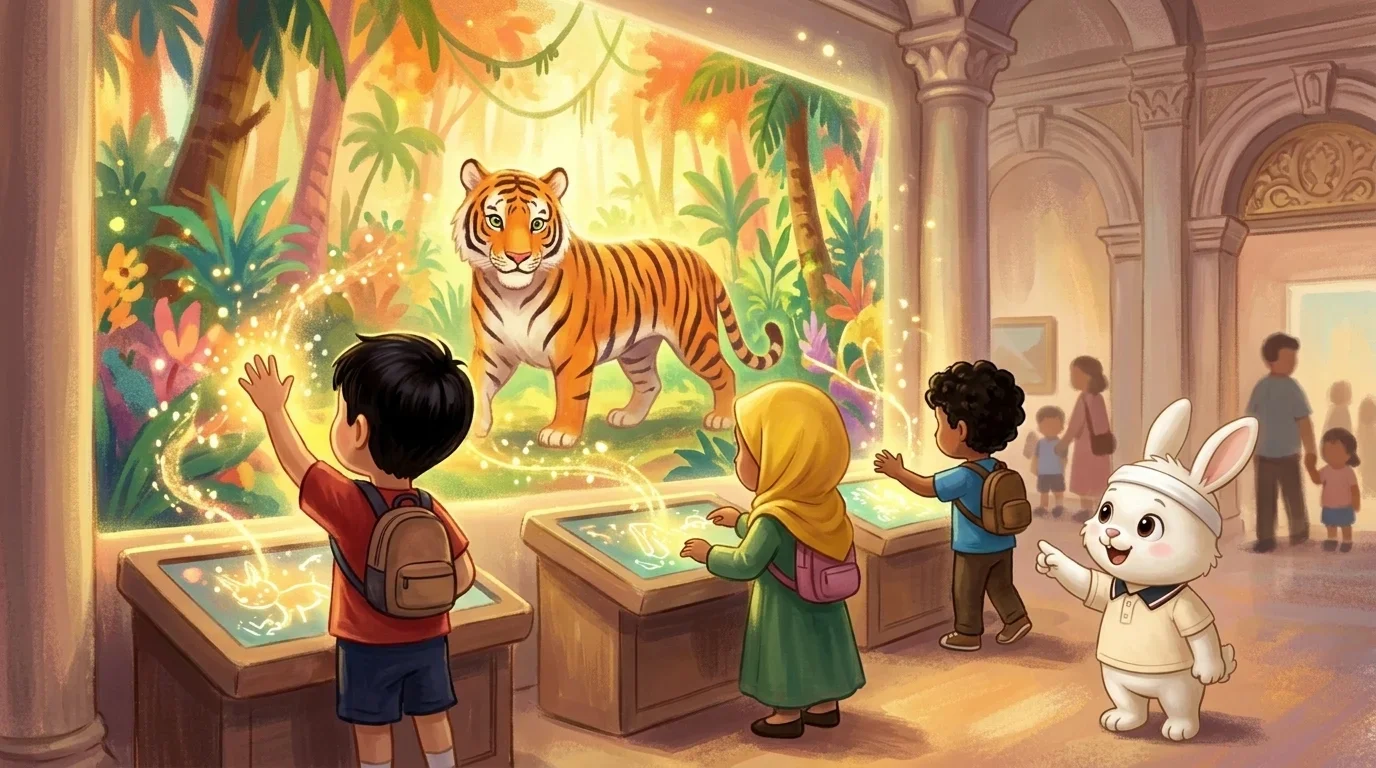
On Thursday 4 December 2025, our children spent an Art Adventure Day at National Gallery Singapore. In the children’s art spaces they drew on giant touch screens, finger-painted on digital easels, met a roaring tiger projection and traced animals on a glowing wall. Below: what they did, why each activity helps, and tips for visiting with your own child.
Big rooms, glowing walls and art you can touch. The children’s spaces at National Gallery Singapore are made for curious hands, and our class could not wait to explore them.
Galleries can feel quiet and serious. These spaces are the opposite: dark rooms with bright projections, screens you can draw on and soft corners to rest in. Perfect for children who learn by doing.
What we did on our Art Adventure Day
1. Face to face with a tiger
A huge wall projection showed a tiger leaping out of the jungle, and the children gathered in front of it to watch.
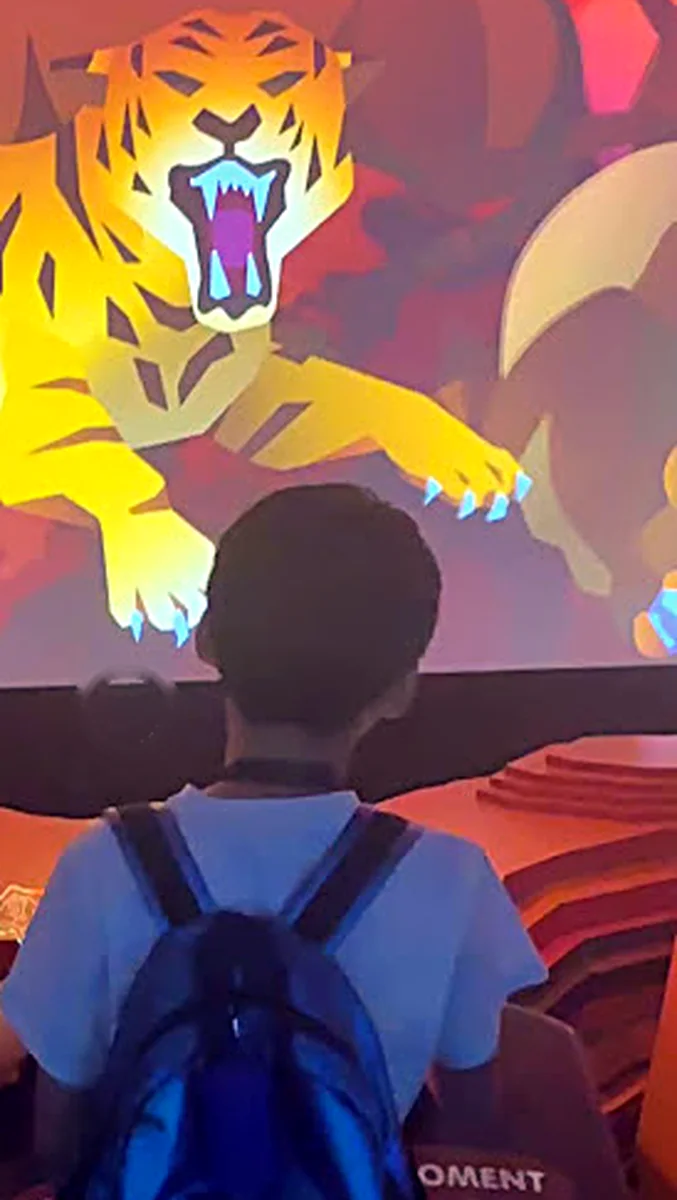
Why this helps: a big, safe “surprise” lets children practise noticing a strong feeling and staying regulated, with a teacher close by.
2. Drawing on the rain wall
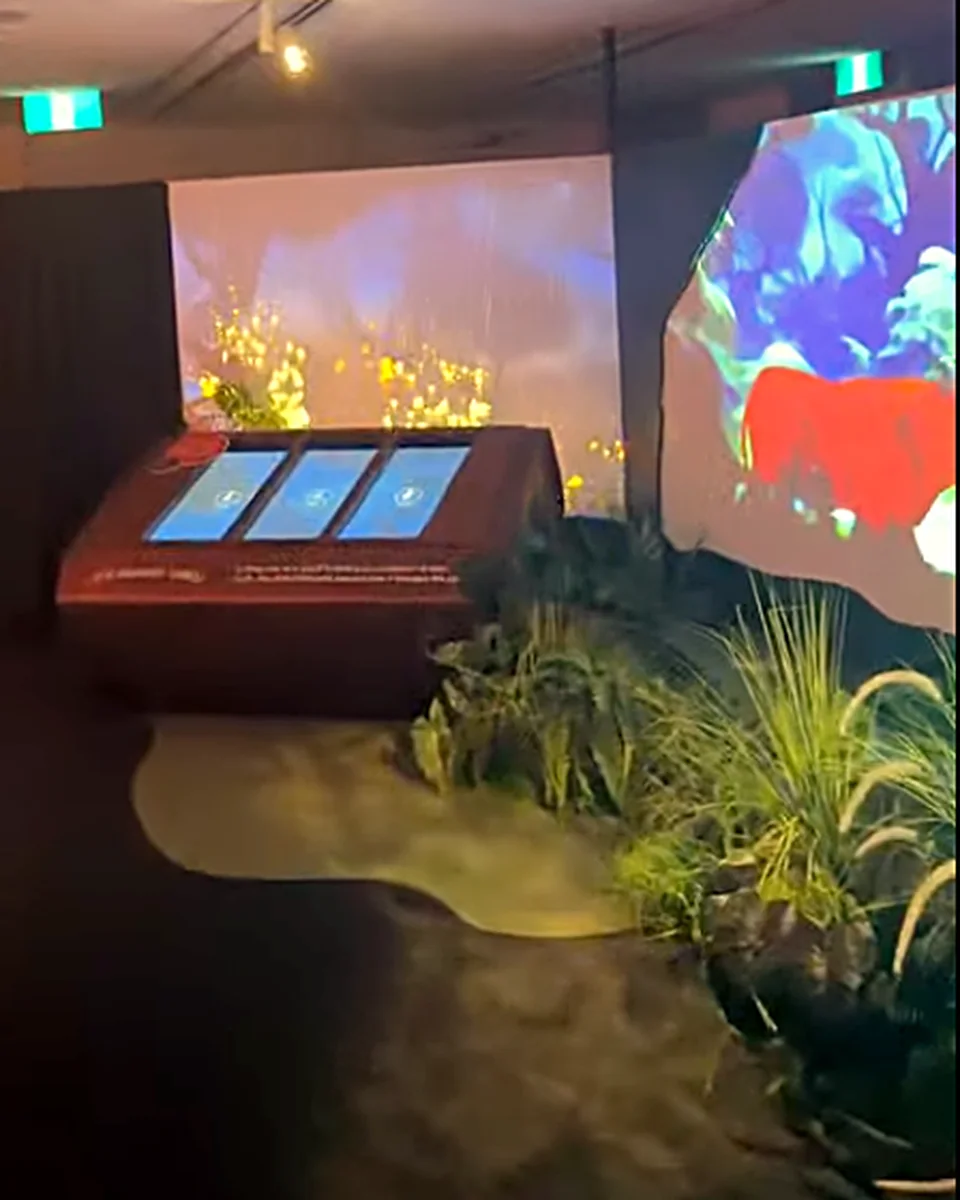
Low touch screens let the children draw shapes that floated up onto a big “rain” wall. They took turns, watched their drawings appear, then tried again.
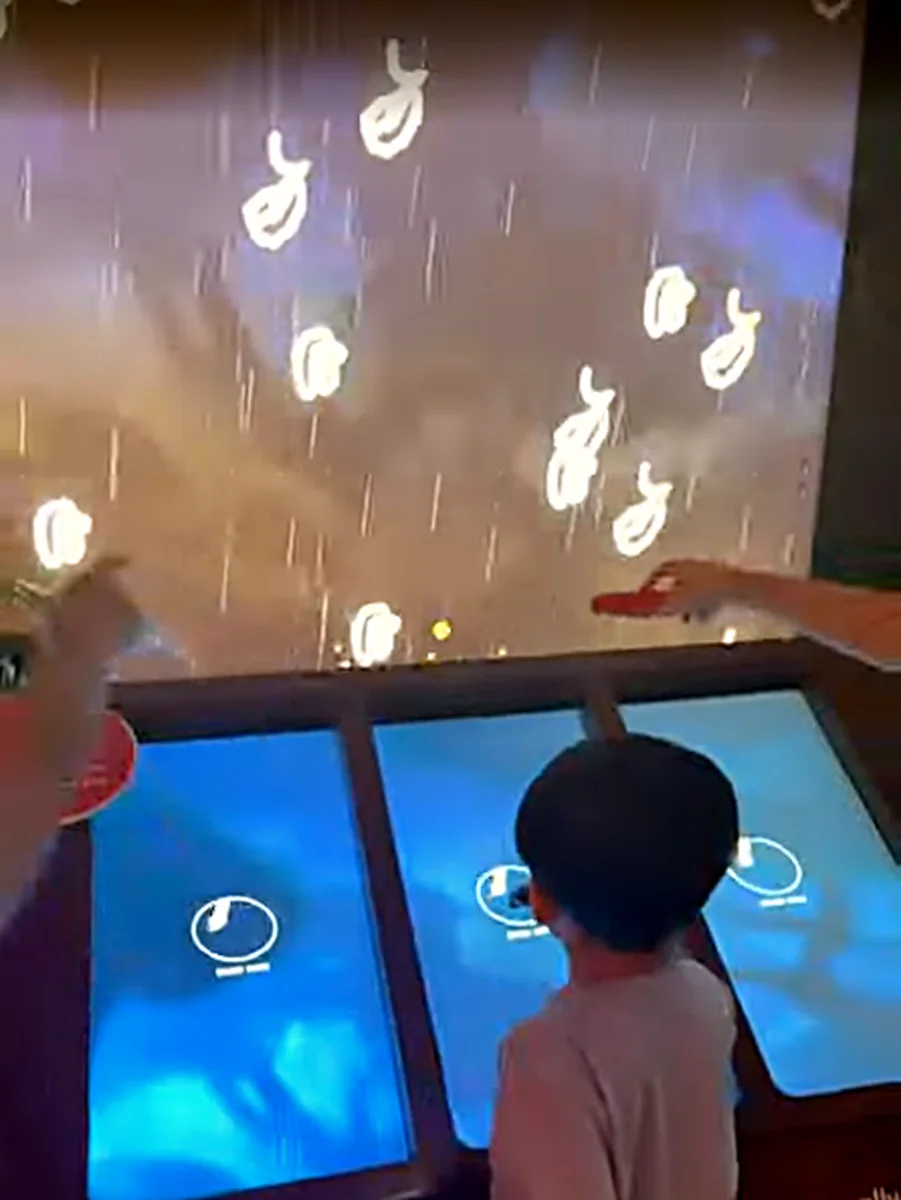
Why this helps: cause and effect (“I draw, it appears”) keeps attention going, and sharing three screens is real turn-taking practice.
3. Hands at work
Leaning over the screen stations, the children used their whole hand, then one finger, to trace lines and shapes.
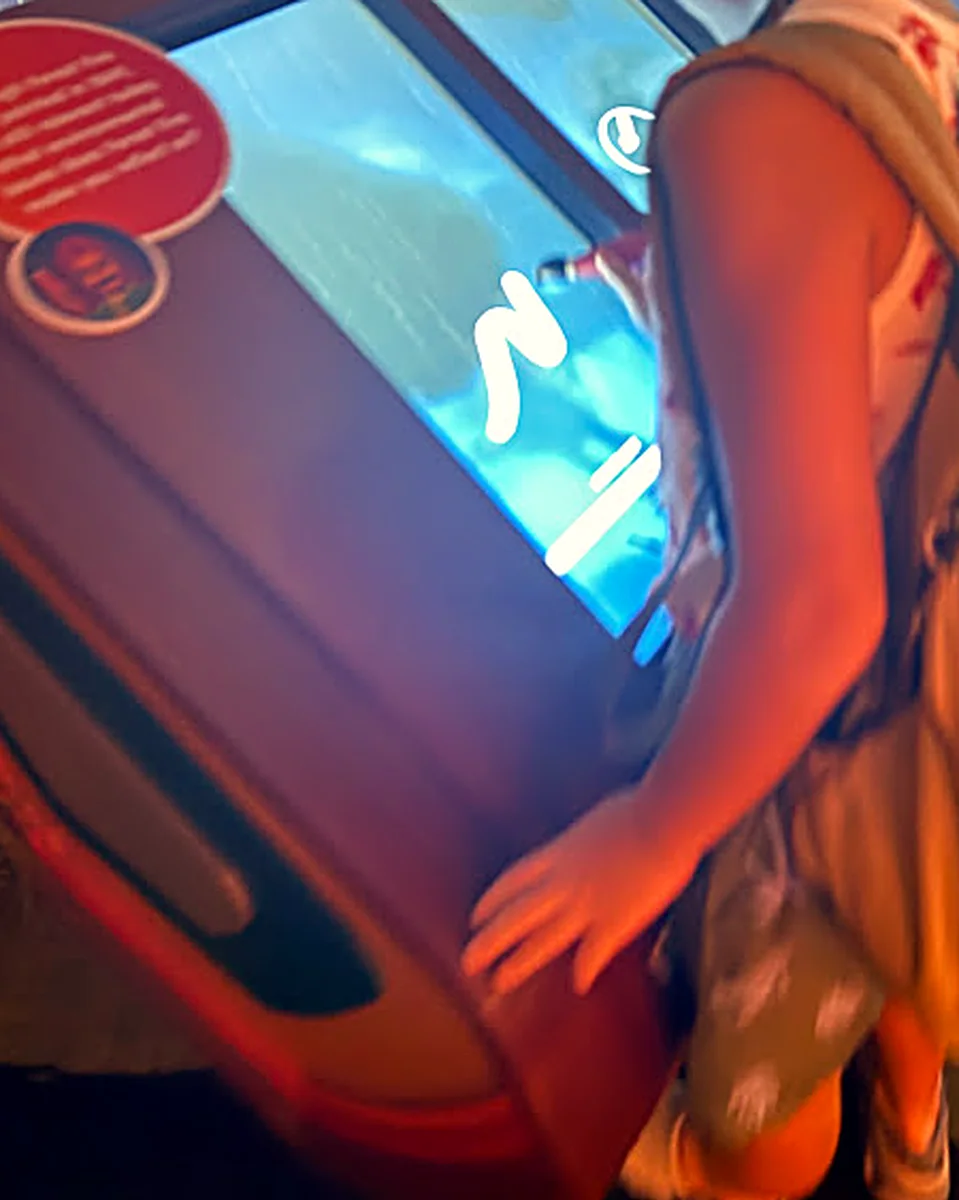
Why this helps: tracing builds hand-eye coordination and finger control, the same skills children later use for writing.
4. Painting with a finger
On the digital easels, the children chose colours from a palette and painted with their fingers. No mess, lots of colour.
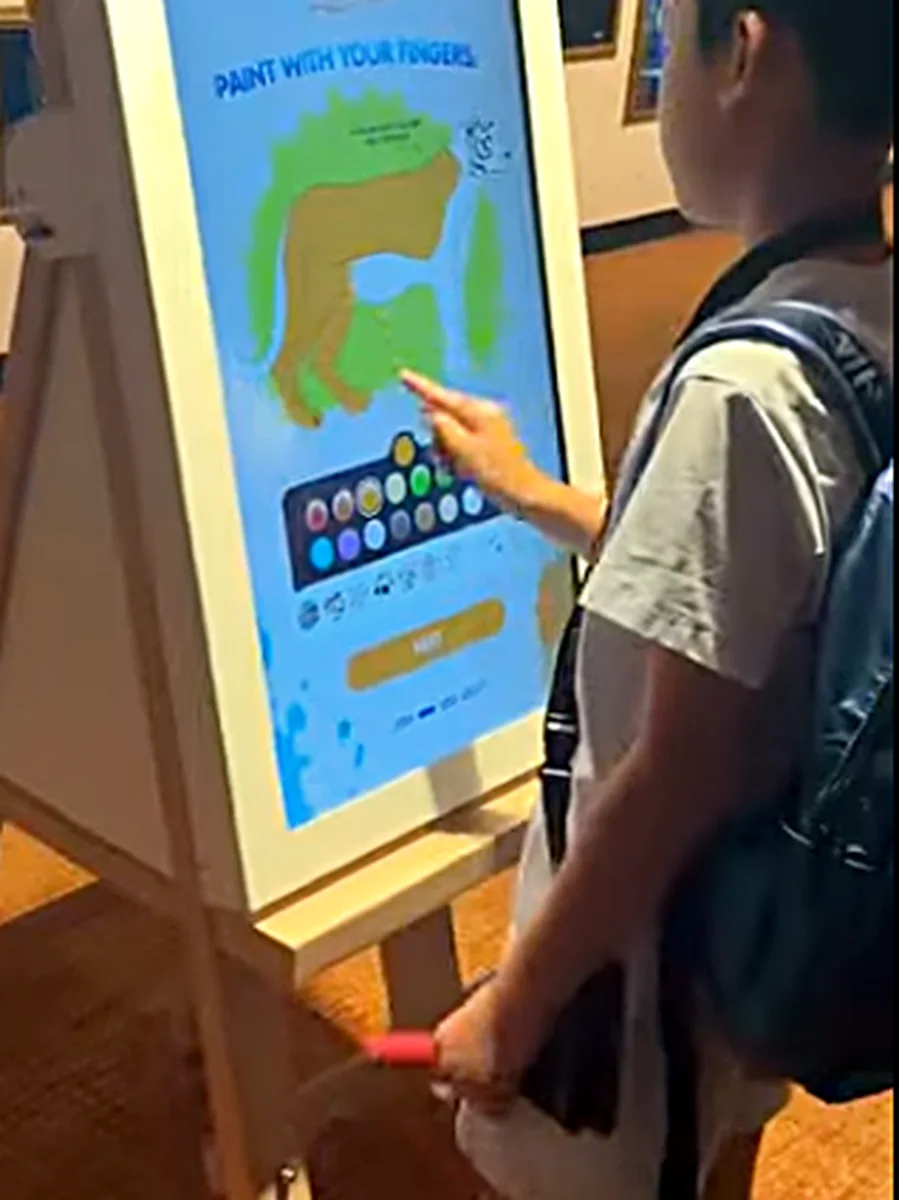
Why this helps: choosing a colour, then using it, is a small decision with a clear result, which builds confidence and early planning.
5. Animals on the wall
Along a long, wavy wall, the children traced animal outlines with light pens. One brought his soft toy along to “see” the animals too.
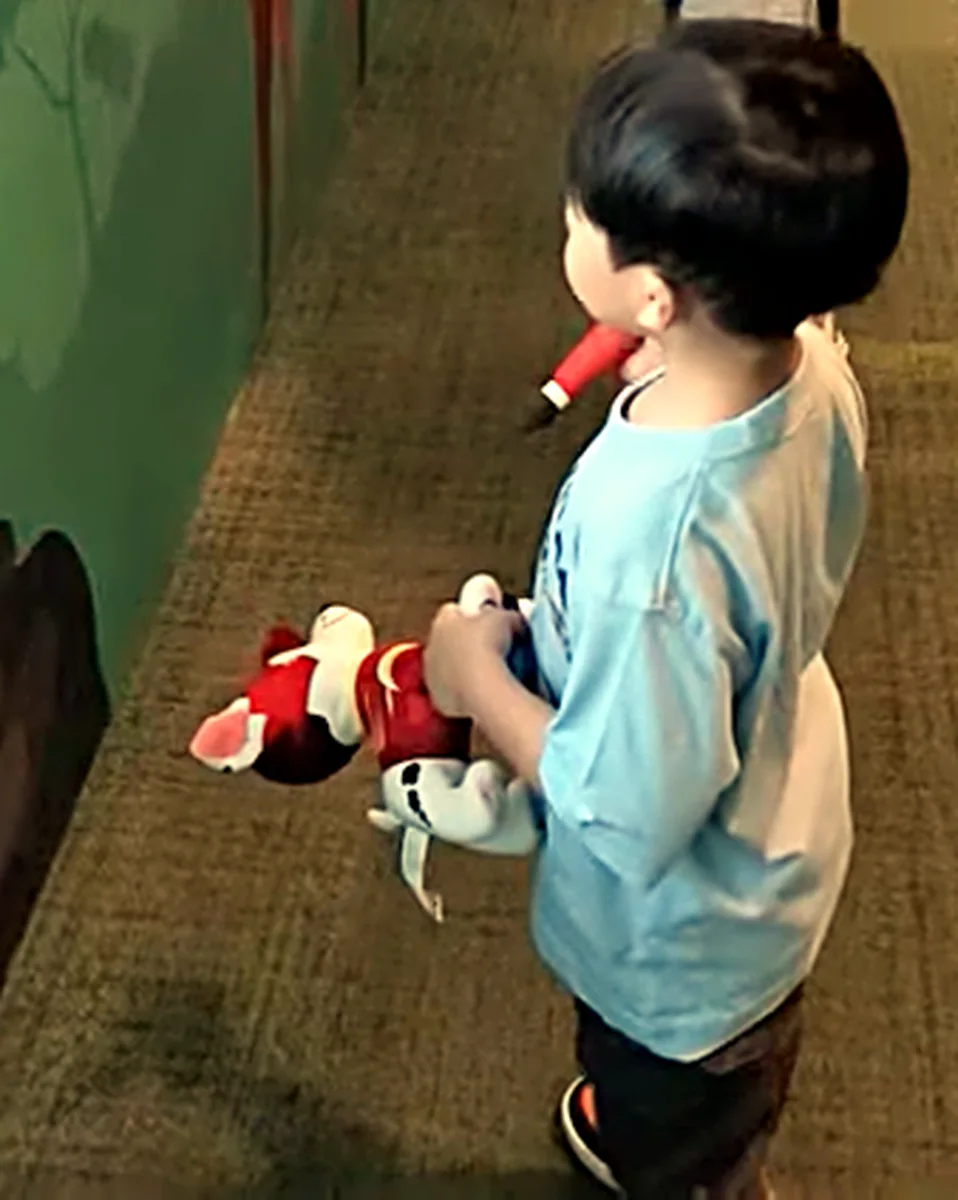
Why this helps: moving along the wall, stopping and starting, gives body movement between quieter tasks, and a familiar toy can help a child feel safe in a new place.
Keeping a gallery visit calm
- Show photos first, so your child knows what to expect.
- Stay close in dark rooms and hold hands at busy spots.
- Plan a break outside the dark rooms, with water and a snack.
- Keep it short and leave while your child is still enjoying it.
ONE teacher tip
Dark rooms with moving lights can be a lot. Let your child watch from the doorway first. Watching is joining in too.
Visiting with your child: 5 tips
- Check the gallery’s website for current children’s exhibitions, opening hours and any tickets before you go.
- Go on a weekday morning if you can, when it is usually quieter.
- Show your child photos of the gallery first, and tell them the plan.
- Choose two or three things to see, not everything.
- Bring water, a small snack for outside the galleries and ear defenders if noise bothers your child.
Free printable
Gallery Explorer Picture Checklist
Four pictures to find at any gallery or museum, plus a calm visit plan. Print it, bring a pencil, tick as you go. Get the free PDF
More from A Day at ONE
A Day at ONE: Pegboards, Snack Prep and the Playground (real photos from our classes)
A Day at ONE: Our Supermarket Outings (real photos from our classes)
“Galleries can feel quiet and serious for young children. These hands-on spaces show them that art can be touched and played with.”
— Grace Teo, Founder and Child Psychologist at ONE
Make a picture plan before you go
Before a gallery visit, we show children what they will see and choose a few things to find. A short plan turns a big, quiet building into a game.
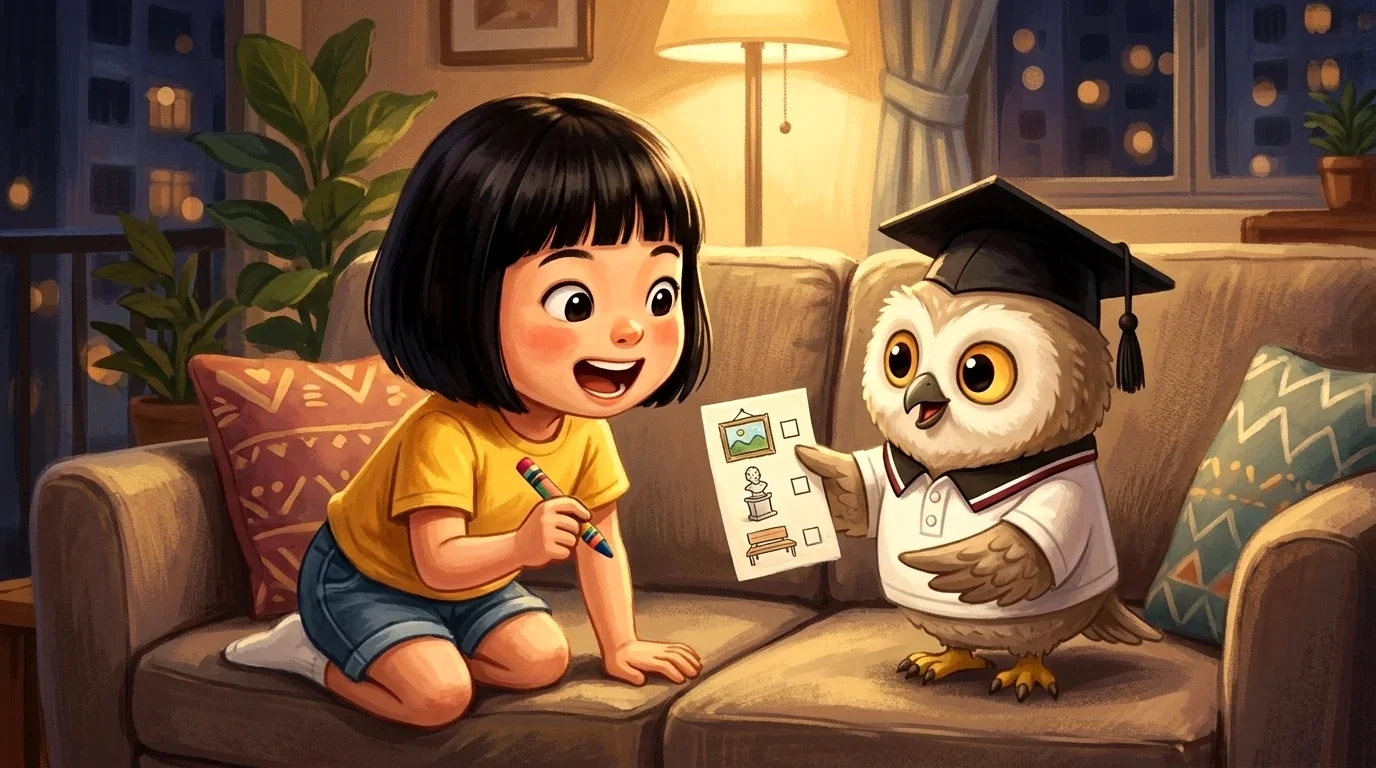
- Look at photos of the gallery together the day before.
- Pick two or three things to find, and draw or print them.
- Tick each one off as you find it, then go for a snack.
If new places make your child anxious, read more about worries and shyness and how we help.
How ONE helps
Outings are part of learning at ONE. Places like galleries, supermarkets and parks let children practise real-life skills: waiting, taking turns, coping with busy places and asking for a break. Our Life & Learning Programme for ages 7 to 12 builds these skills on purpose, and younger children start in Early Intervention and School Readiness.
Would you like your child to learn through real outings like this? WhatsApp us to visit our centre, 5 minutes’ walk from Eunos MRT.
Questions parents ask
Is National Gallery Singapore suitable for young children?
Yes, many families visit with young children, especially the children’s art spaces. Exhibitions change, so check the gallery’s website for what is on before you go.
My child is scared of dark rooms. Should we skip them?
Not necessarily. Look from the doorway first, hold hands, and agree a signal to leave. Brighter rooms are a good start.
How long should a gallery visit be?
For young children, 45 minutes to an hour is plenty, with a break in the middle. Leave while it is still fun.
Is the Keppel Centre for Art Education free?
Yes, entry to the Keppel Centre for Art Education at National Gallery Singapore is free. Check the gallery’s website for opening times before you go.
This article is general information, not a diagnosis or medical advice. If you are worried about your child, speak to your paediatrician or polyclinic doctor.