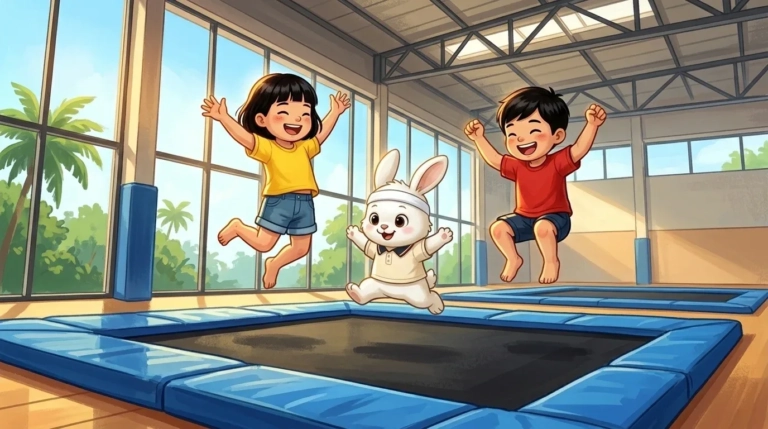
Quick answer
The playground beside Blk 417 Eunos Road 5 is a free HDB neighbourhood playground about a 5-minute walk from our Centropod centre, with a rope net tunnel, swings and stepping stumps. On Wed 18 Nov 2026 one of our classes went there to practise waiting, taking turns and trying something new. Go in the morning or late afternoon to beat the heat, prepare your child with a picture schedule, and agree on a “last turn” before you arrive.
On Wednesday morning, 18 November, one of our ONE classes swapped the classroom for the neighbourhood playground beside Blk 417 Eunos Road 5. It is about a 5-minute walk from our Centropod centre, it costs nothing, and it gave our children a real place to practise what they work on in class: waiting, taking turns, trying something new and leaving when it is time to go.
Here is what we did, why each part of the playground is useful for young children, and how to plan your own visit if your child finds outings hard.
Our class outing to the playground
Before an outing like this, a simple picture schedule helps: walk to the playground, play, snack, walk back. Seeing the plan helps children who worry about change, and it gives adults something to point back to when a child does not want to move on.
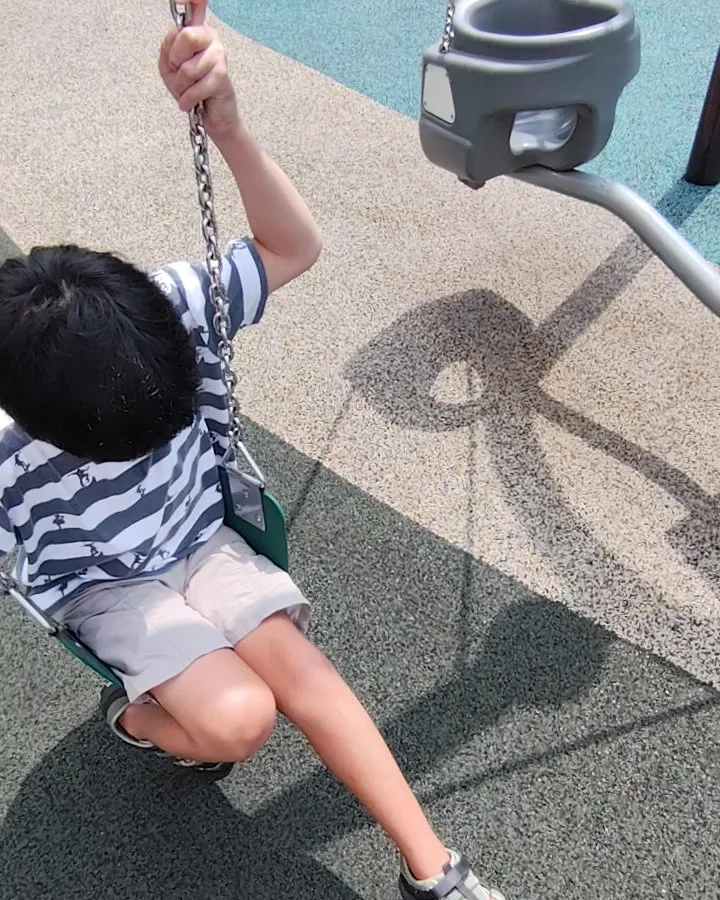
At the playground we kept things simple. Each child had a few minutes of free play first, so they could explore at their own pace. Then our teachers set small goals: climb through the net tunnel, wait for a turn on the swing, try the stepping stumps. Every goal was small enough to succeed at, and every success was noticed.
Tip: a playground is a busy place for a child who is still learning to share space. Free play first, then one or two small goals, works better than a long list of “try this next”.
What to do at the playground (and why it helps)
1. Crawl and climb through the net tunnel
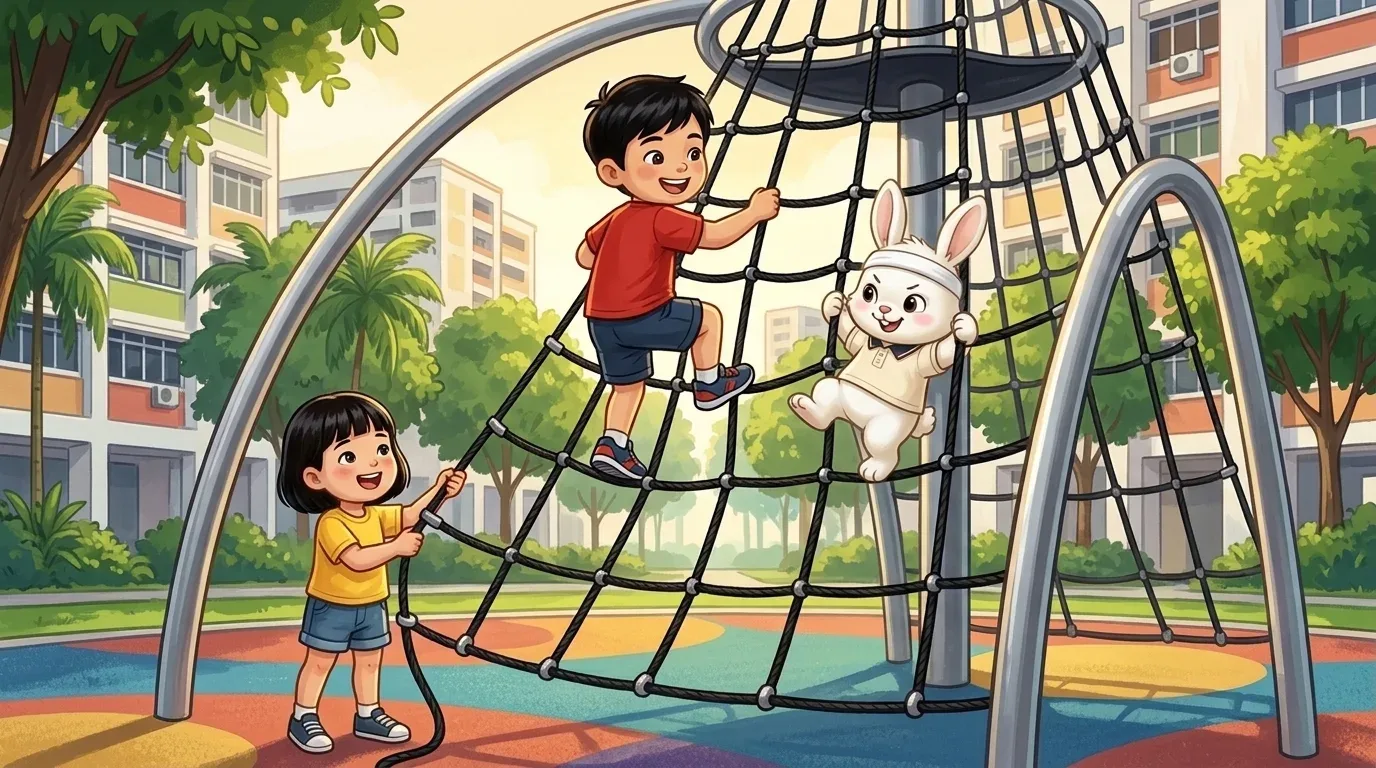
The black net tunnel is the playground’s main feature. Children climb up, crawl through and come out the other side. Hold back and let your child work out where to put their hands and feet.
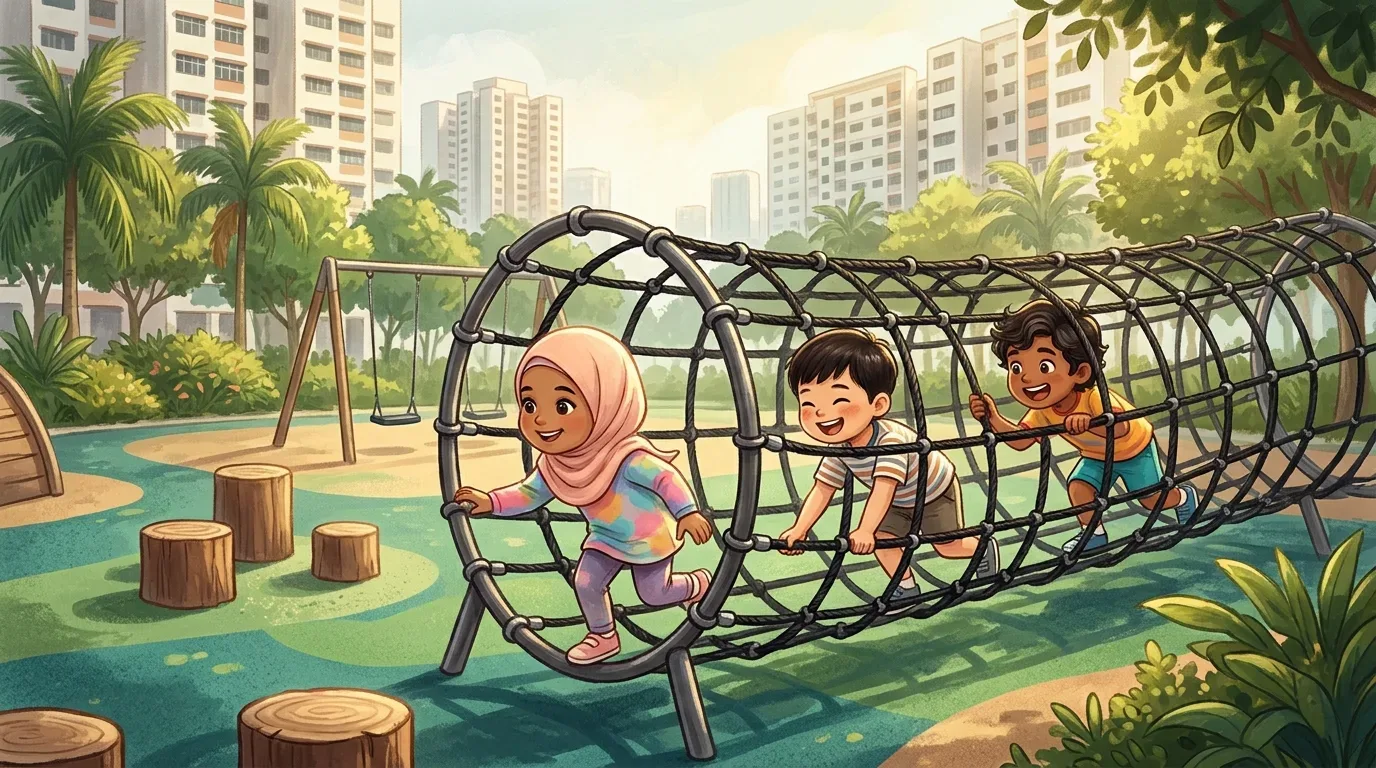
Why this helps: planning a climb step by step builds motor planning and body awareness, the skills behind getting dressed, using stairs and joining in at the playground with other children.
2. Balance on the stepping stumps
The wooden stumps step up and down like a small staircase. Cautious children can hold your hand on the first try, then just a finger, then nothing.
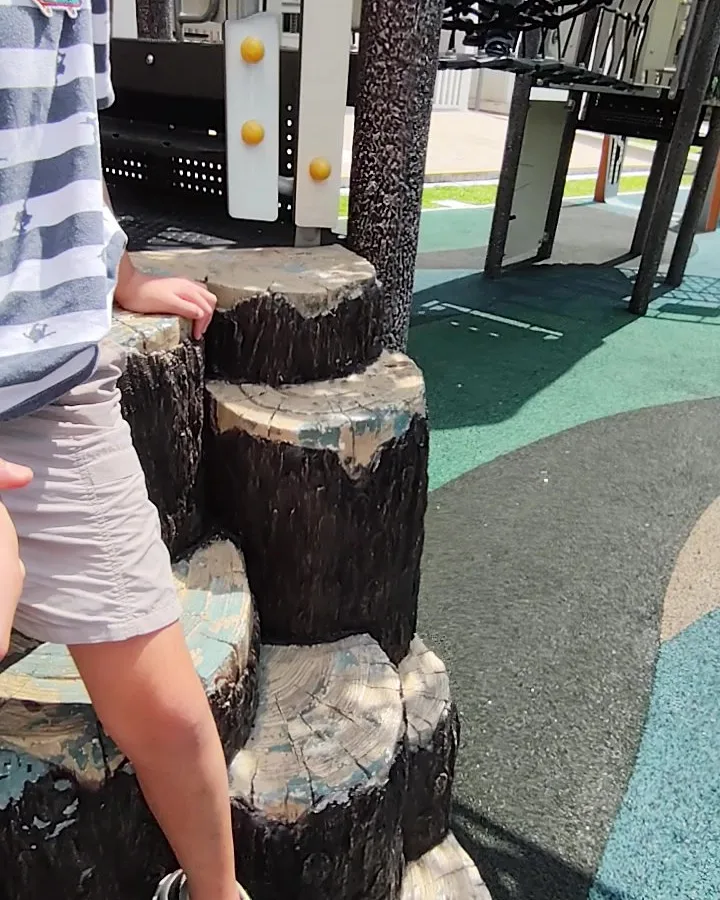
Why this helps: stepping from stump to stump trains balance and leg strength, and fading your help one step at a time builds a child’s confidence to try new things on their own.
3. Swing, and practise waiting for a turn
Swings are often the most popular spot, so they are perfect for practising waiting. Use a simple rule your child can see: count ten pushes together, then it is the next child’s turn.
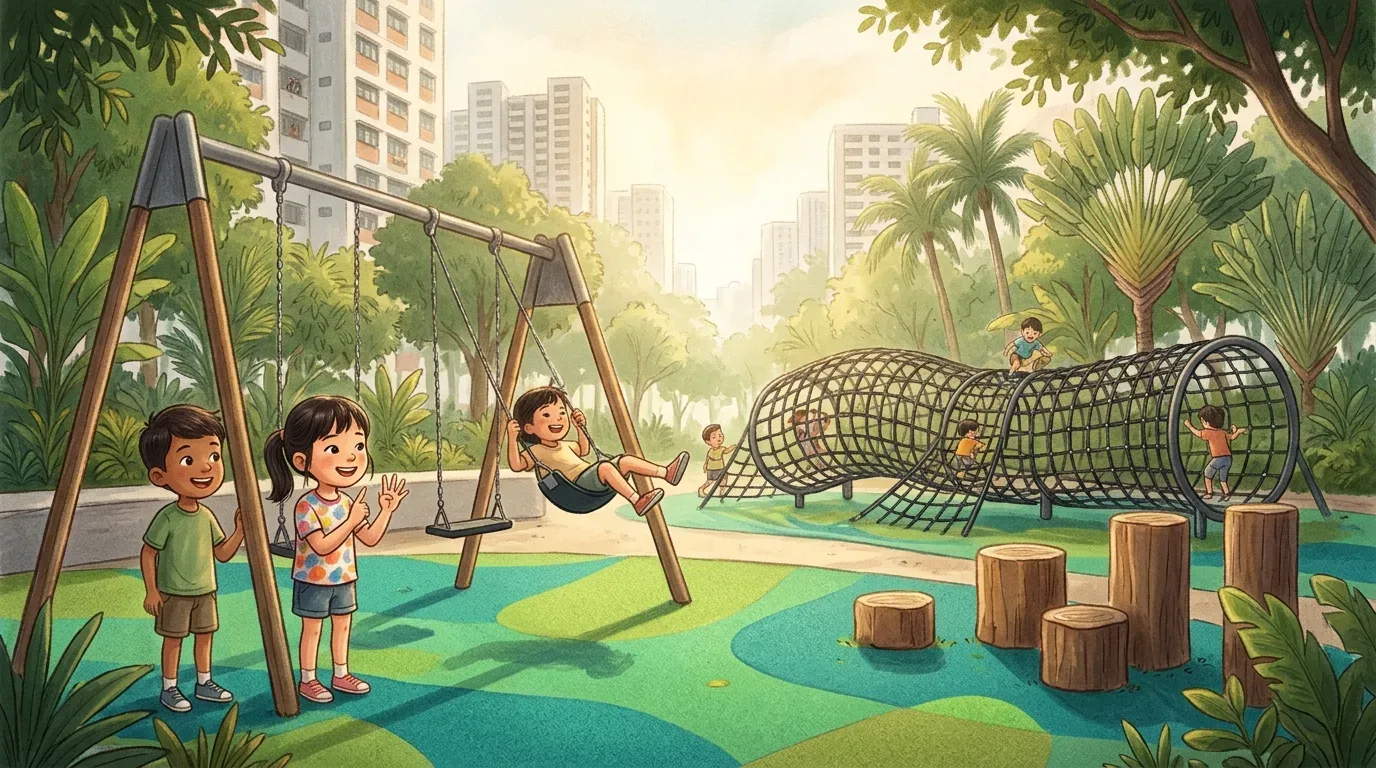
Why this helps: swinging gives strong movement input that many children find calming, and counting turns out loud turns “waiting” from something vague into something your child can see and predict.
Is a neighbourhood playground good for children with sensory needs?
Yes, with a little planning. It is outdoors, so it feels less closed-in than an indoor play gym, and there is space to step away when things get too much. A few things to plan for:
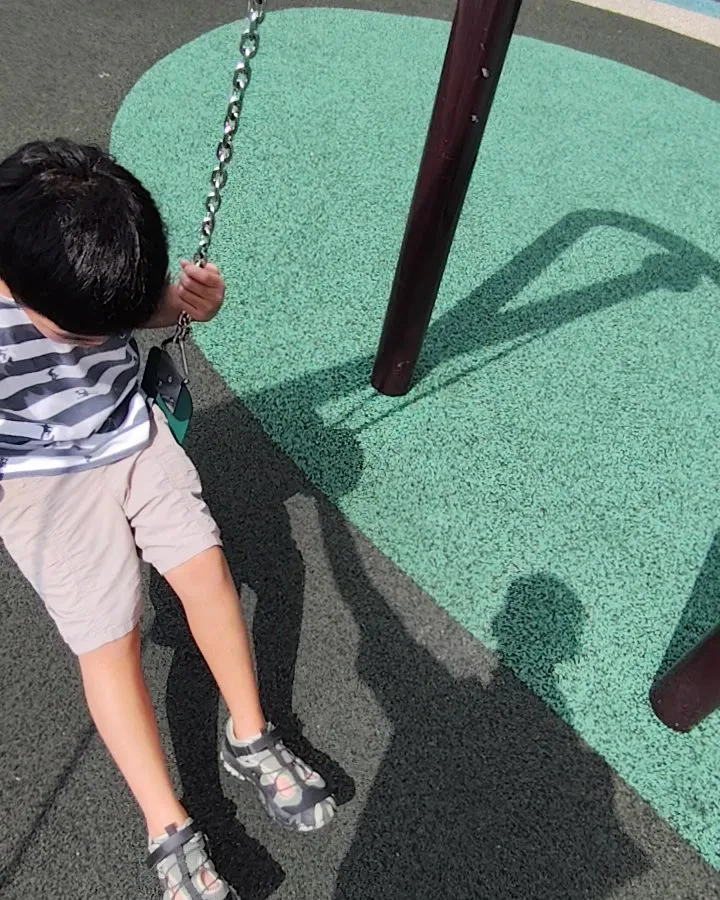
- Heat and sun: the play surfaces get hot by midday. Mornings before 10am or late afternoons are more comfortable.
- Noise and crowds: weekends and after-school hours are busiest. Bring ear defenders if your child is sensitive to sound.
- A calm spot: pick a quiet bench away from the swings before you start, and show your child where to go for a break.
- Leaving: give a five-minute and a one-minute warning, and agree on a “last turn” before you arrive.
If your child gets overwhelmed, move to the calm spot, offer water and wait. Coming back to play after a short break is a win, not a failure.
Before you go: prepare your child
Children who struggle with outings usually do better when they know what is coming. Two things help most:
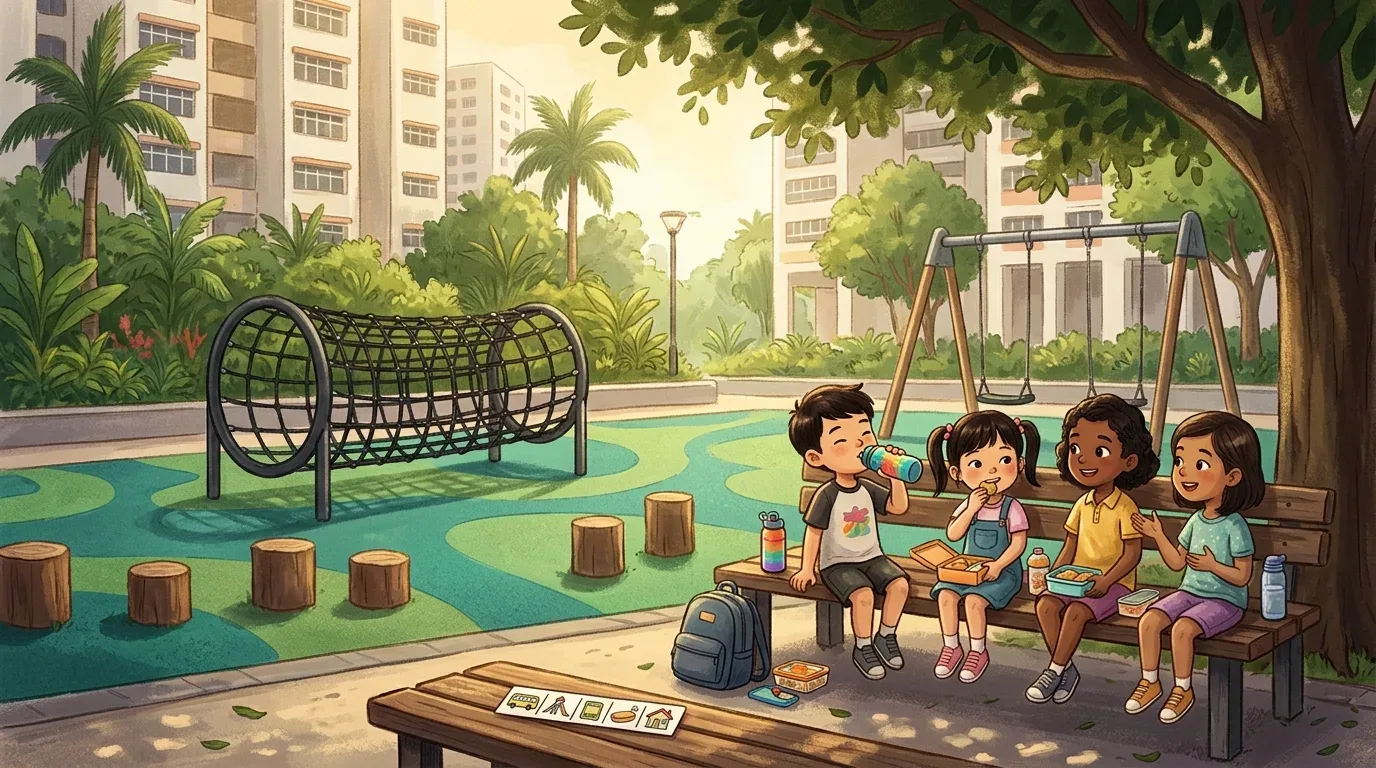
- A picture schedule. Our free Picture Schedule Maker has a ready-made “Going out” routine. Add a playground card, print it on A4 or keep it on your phone, and go through it together the night before.
- Photos of the playground. Show your child the photos in this article so the net tunnel and swings look familiar when you arrive.
Where it is and how to get there
Address: the playground beside Blk 417 Eunos Road 5, Singapore 400417. Open in Google Maps
- Walking: about 5 minutes from our Centropod centre, among the HDB blocks along Eunos Road 5.
- By MRT: Eunos and Paya Lebar MRT stations are both within walking distance. Check Google Maps for the best route from where you are.
- Cost: free. It is a public HDB playground with no booking needed.
What to bring
- Water bottle and a small snack for the break
- Hat and sunscreen
- Closed shoes that grip well for climbing
- Ear defenders if your child is sensitive to noise
- A spare set of clothes and a small towel
- Your picture schedule, printed or on your phone
How outings fit into our programmes at ONE
Playground trips are not just a treat. In our Early Intervention programme, small groups practise skills like waiting, following a plan and coping with change in class, then try them out in real places like this neighbourhood playground, with a teacher close by.
Children practise joining in, sharing and teamwork in our Weekend Social Learning Group, and children getting ready for Primary 1 build independence in School Readiness. Our child psychologist sets each child’s goals after an assessment, so every outing has a purpose. See all our programmes.
More from A Day at ONE
A Day at ONE: Pegboards, Snack Prep and the Playground (real photos from our classes)
“The playground is only a short walk away, but for our children the walk is part of the lesson: staying together, stopping and looking.”
— Dickson, Associate Centre Lead at ONE
Make leaving the playground easier
Leaving is often the hardest part of a playground trip. A clear warning helps children finish without a meltdown.
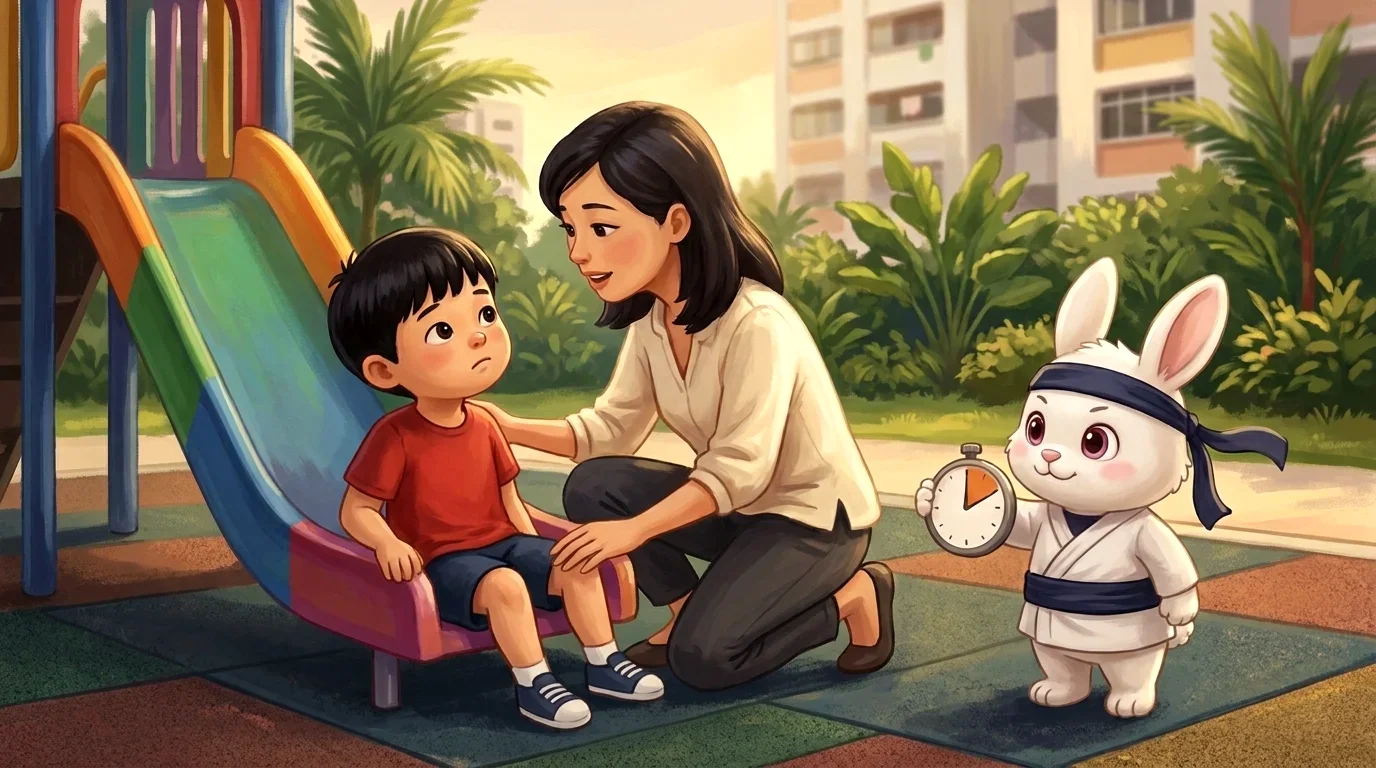
- Give a 5-minute warning, and show it on a visual timer.
- Name the last turn: “Two more slides, then shoes on.”
- Say what comes next, especially if it is something nice, like a snack.
If transitions often end in tears, read more about meltdowns and behaviour and how we help.
Free printable
A picture bingo game for school holiday days out. Spot, tick and talk about what you find. Get the free PDF
FAQ
Is the playground at Blk 417 Eunos free?
Yes. It is a public HDB neighbourhood playground, open to everyone, with no booking or fee.
Which MRT station is nearest?
Eunos and Paya Lebar MRT stations are both within walking distance. Check Google Maps for your route.
What age is a neighbourhood playground like this suitable for?
It suits preschool and primary school children best. Toddlers can use the lower stumps with an adult close by.
When is the best time to visit with a child who dislikes crowds?
Weekday mornings are usually quietest and coolest. Avoid late afternoons after school and weekend evenings if your child finds busy places hard.
Outings like this are part of how we help children use their skills in the real world, not just in the classroom. If playgrounds, waiting or leaving are still hard for your child, book an assessment or talk to our team. Our child psychologist can help you find out what is getting in the way.