Quick answer
Our Hexacube centre has its own climbing wall, with soft crash mats below. Children climb barefoot, plan their route before they start, and take turns on the wall. Climbing builds strength, balance, body planning and confidence, and many children find it easier to focus at the table afterwards. These photos are from classes on Thu 8 Oct and Thu 5 Nov 2026.
Yellow and orange mountains painted on the wall, bright holds of every colour, and thick grey mats underneath. For many of our children, the climbing wall is the favourite part of the room.
We don’t show our children’s faces, so you will see backs, hands and a lot of feet.
First, plan the route
Before climbing, children look up and point: which hold first, which one next? Teachers keep the goal small, like “touch the red one”.
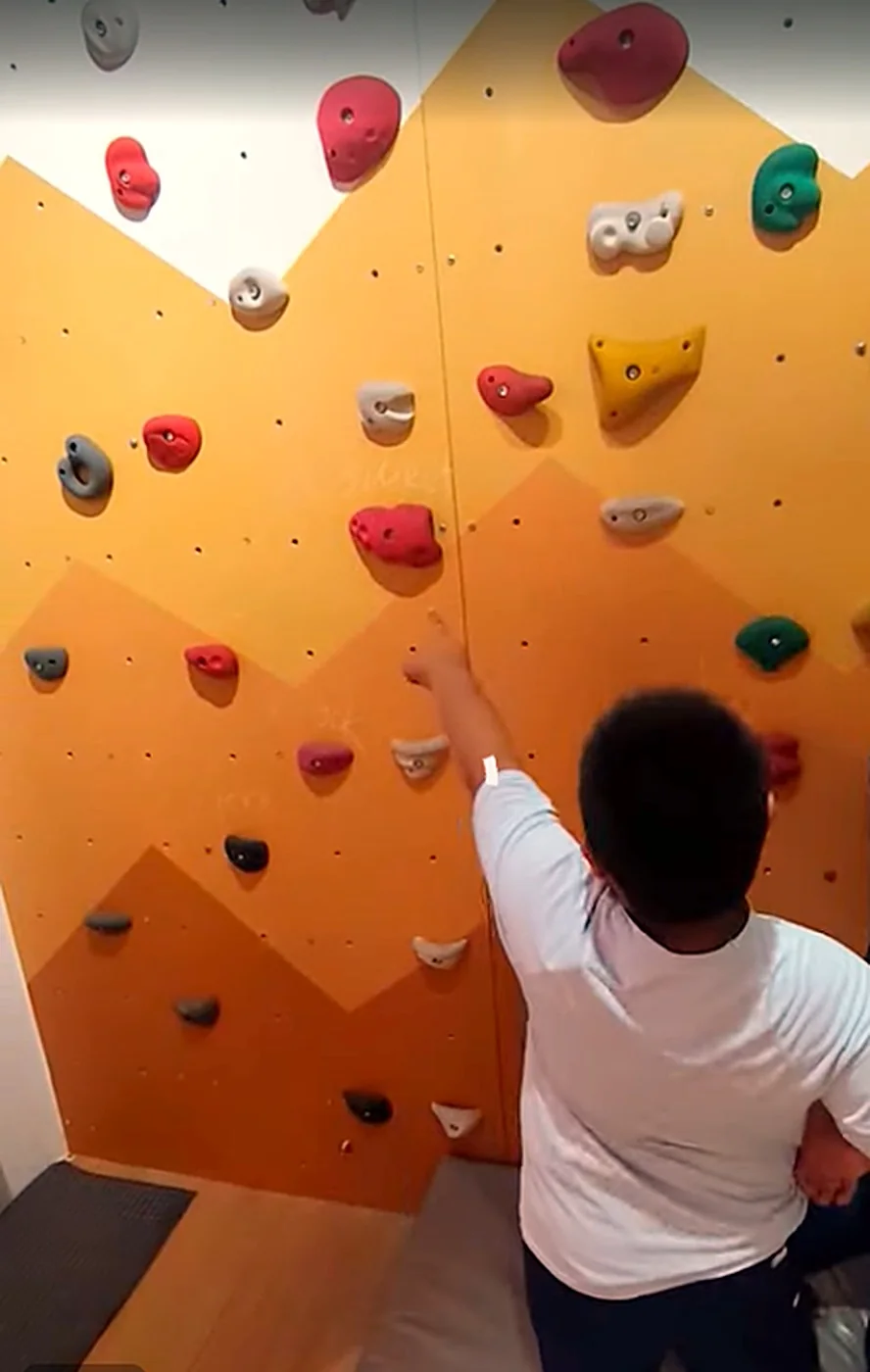
Why this helps: looking, pointing and planning before moving builds motor planning, the same skill children use to get dressed, use stairs or copy from the board.
Then climb, one hold at a time
Children climb barefoot so they can feel each hold with their toes, and they learn to look down for the next foothold before they reach up.
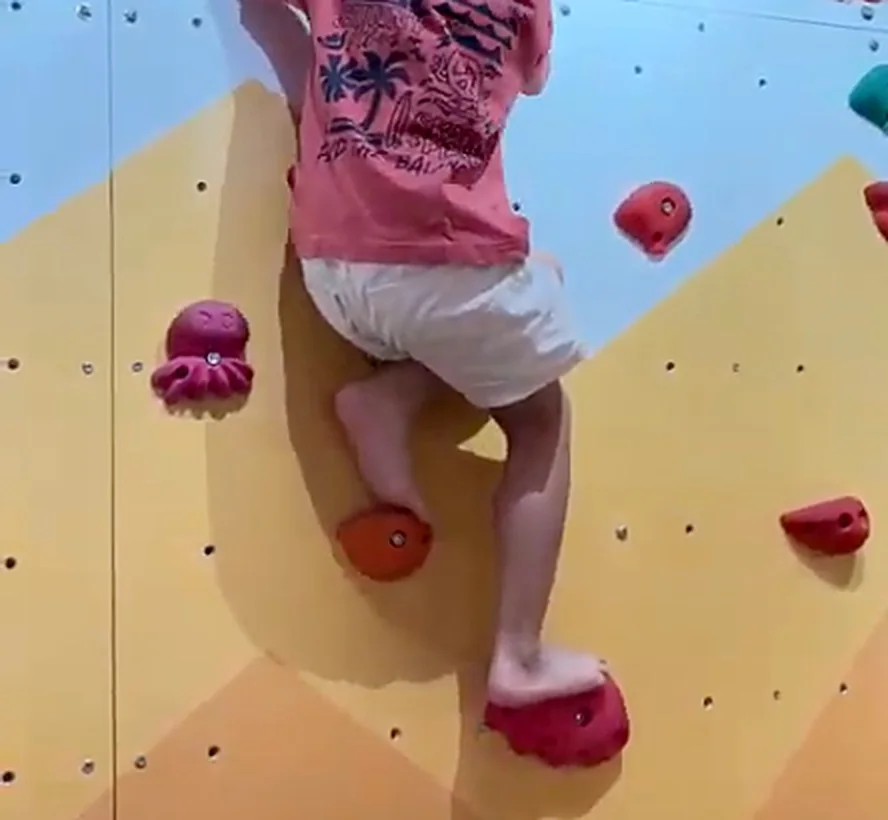
Why this helps: gripping with hands and feet gives strong “heavy work” to muscles and joints, which many children find calming. It also builds the hand strength needed for holding a pencil.
Climbing side by side
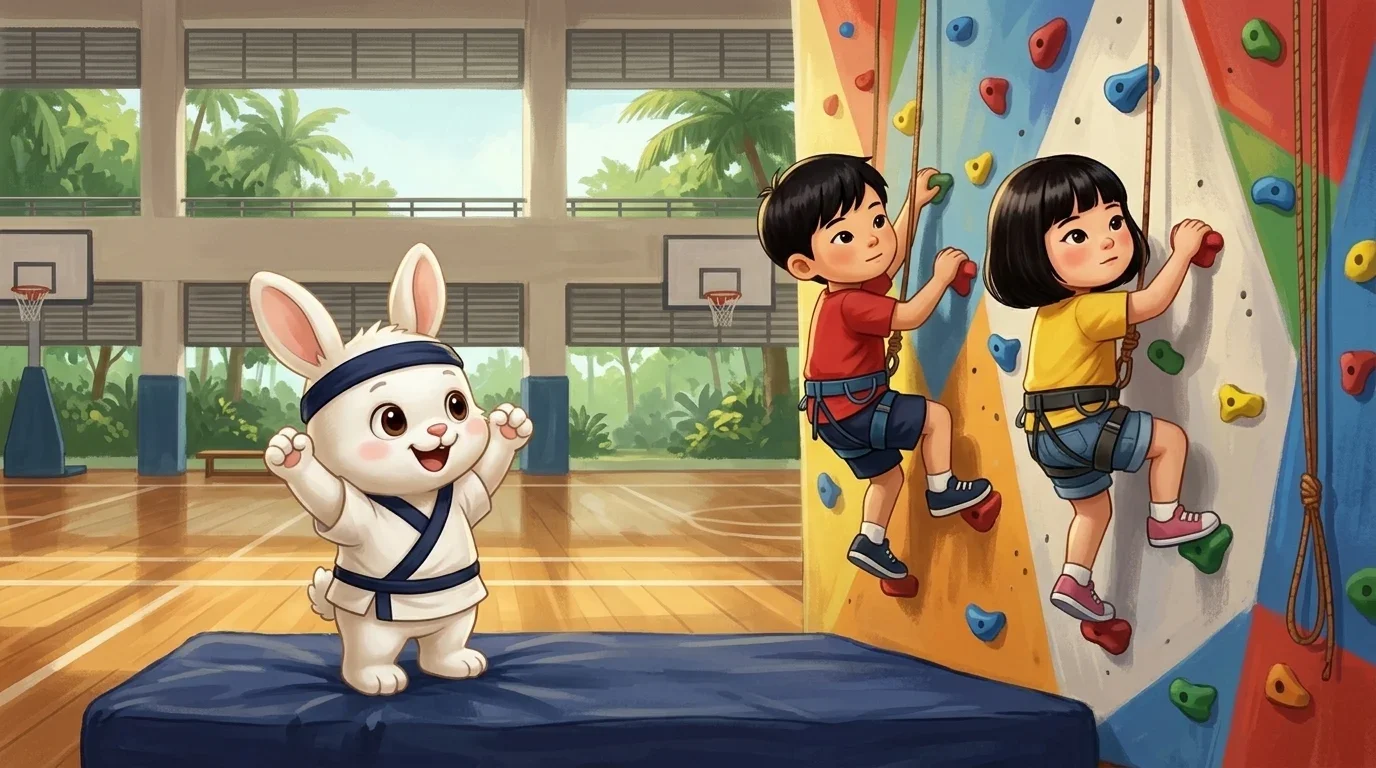
The wall is wide enough for two. Children learn to share the space, wait when a friend is in the way, and cheer each other on.
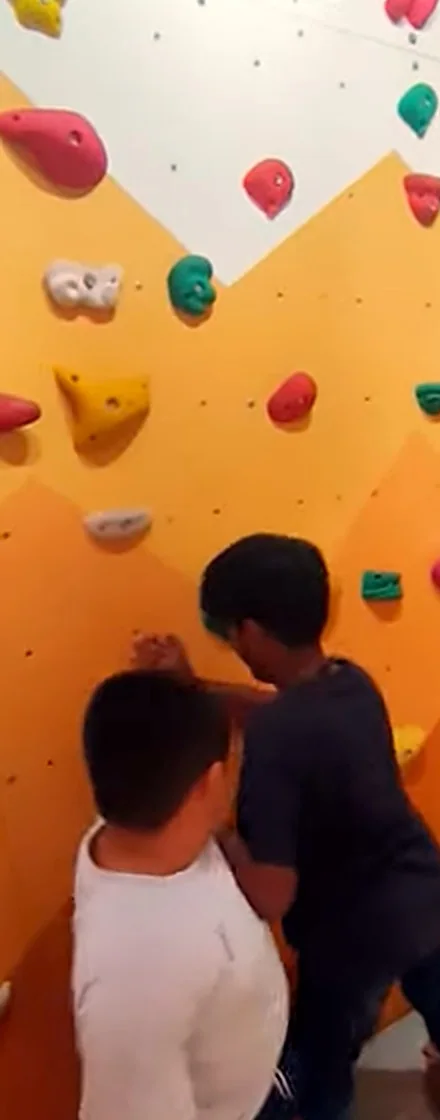
Why this helps: climbing next to a friend is real practice in sharing space, waiting and noticing others, all in a fun, physical setting.
ONE teacher tip
Climbing is about trying, not reaching the top. A child who steps onto the first hold and comes back down has had a successful climb.
How we keep it safe
- Thick crash mats under the whole wall.
- A teacher right beside the climber every time.
- Low, wide routes for beginners and higher routes as confidence grows.
- Bare feet or grippy socks, and no climbing above a teacher’s reach.
Try it at home (no wall needed)
- Animal walks: bear crawl, crab walk and frog jumps across the room.
- A “hold the wall” game: push against a wall for 10 seconds, then rest.
- Climb at a neighbourhood playground on the net or ladder, with you close by.
More from A Day at ONE
A Day at ONE: Pegboards, Snack Prep and the Playground (real photos from our classes)
A Day at ONE: A Life Skills Morning (real photos from our classes)
“Our rule is simple: trying counts. Touching the first hold is already a win.”
— Dickson, Associate Centre Lead at ONE
No wall at home? Try animal walks
Climbing gives children strong “heavy work” for their muscles. Animal walks give the same kind of input in your living room:

- Bear crawl: hands and feet on the floor, bottom up, across the room.
- Crab walk: tummy up, walking on hands and feet.
- Frog jumps: crouch low, then jump forward.
- Wall push: push against a wall for ten seconds, then rest.
Many children feel calmer and focus better after heavy work. Read more about sensory needs and how we help.
Free printable
A quick picture check-in for busy bodies, plus movement breaks that help children settle and focus. Get the free PDF
How ONE helps
Movement is planned into every day at ONE. The climbing wall is part of Early Intervention, School Readiness and Education Therapy sessions, with each child’s goals set by our child psychologist, Grace Teo.
Would you like to see our climbing wall? WhatsApp us to book a visit.
Questions parents ask
Is climbing safe for young children?
With thick mats, low routes and a teacher beside them, yes. Children climb only as high as they are comfortable.
My child is scared of heights. Can they still join?
Yes. Many children start by touching the holds from the mat. We never push a child higher than they want to go.
Why don’t you show the children’s faces?
We prefer to protect our children’s privacy, so we only share photos of hands, backs and activities.
Why does climbing help some children calm down?
Climbing and pushing give strong input to muscles and joints, which many children find calming and organising. It is why we often plan movement before table work.
This article is general information, not a diagnosis or medical advice. If you are worried about your child, speak to your paediatrician or polyclinic doctor.